
Author name: waseem1

Oil and Gas Manpower Supply Companies
Blog

Oil and Gas Manpower Supply Companies in Qatar: Services & Roles

Qatar’s oil and gas industry relies on skilled engineers, technicians, operators and safety professionals to keep energy facilities running, execute major projects and maintain operational standards. Contractors and energy companies need qualified personnel who meet technical specifications, understand industrial safety procedures and are ready to work within demanding project schedules. Oil and gas manpower supply companies connect energy businesses with experienced professionals for offshore operations, LNG facilities, refineries, drilling activities, pipeline projects and industrial maintenance. Their services cover technical recruitment, workforce deployment, candidate screening and employment administration, giving businesses a structured way to fill critical positions and manage changing staffing requirements. What Do Oil and Gas Manpower Supply Companies in Qatar Provide? Oil and gas manpower suppliers source qualified personnel for exploration, production, processing, transportation, maintenance and construction activities. They work with energy operators, EPC contractors, engineering firms and industrial service providers to fill technical and operational positions. Technical recruitment: Sourcing engineers, plant operators, technicians, welders, inspectors and other skilled professionals. Candidate screening: Verifying qualifications, employment history, technical experience and role-specific certifications. Workforce mobilisation: Coordinating employment documentation, medical assessments, onboarding and project deployment. Contract staffing: Supplying personnel for defined projects, shutdowns, maintenance programmes and longer-term assignments. Employment administration: Managing agreed responsibilities for payroll, employment records, leave and contract documentation. Workforce coordination: Handling staffing changes, replacement requests, contract extensions and ongoing personnel requirements. Which Oil and Gas Roles Are Available Through Manpower Suppliers? Oil and gas operations require a combination of engineering expertise, practical trade skills, operational experience and safety supervision. The required workforce varies between offshore platforms, LNG processing facilities, refineries, drilling sites and pipeline projects. Job category Common positions Main responsibilities Engineering Process, mechanical, electrical and instrumentation engineers Engineering design, technical reviews, troubleshooting and project execution Plant operations Field operators, control room operators and production operators Equipment monitoring, process control and operational reporting Mechanical and electrical maintenance Mechanical technicians, electricians and rotating equipment technicians Equipment servicing, repairs, fault diagnosis and preventive maintenance Welding and fabrication Pipe welders, structural welders and fabricators Pipework fabrication, structural assembly, welding and repair Quality and inspection QA/QC inspectors, welding inspectors and NDT technicians Inspection, testing, quality verification and documentation Health, safety and environment HSE officers, HSE engineers and safety supervisors Hazard identification, safety monitoring, incident prevention and reporting Rigging and lifting Riggers, banksmen and lifting supervisors Load handling, lifting coordination and equipment movement Project support Project engineers, planners, document controllers and procurement specialists Scheduling, materials coordination, technical documentation and project reporting Businesses get better recruitment results by providing detailed job descriptions, identifying mandatory qualifications and specifying the equipment, systems or facilities candidates will work with. Essential Services Offered by Oil and Gas Manpower Suppliers Technical Recruitment and Candidate Verification Technical recruitment matches candidates to the actual demands of an oil and gas position. Suppliers assess professional qualifications, previous project assignments, equipment experience and technical competencies before presenting candidates to the employer. Specialist positions often require additional verification, including trade tests, professional references, certification checks and technical interviews. These checks give employers a stronger basis for evaluating candidate suitability and reduce the risk of hiring personnel without the required experience. Skilled Workforce Supply for Projects and Shutdowns Oil and gas projects experience changing staffing demands throughout their lifecycle. Construction, installation, commissioning, planned maintenance and shutdown activities each require different combinations of workers. Manpower supply services Qatar businesses use for these assignments include arranging technicians, welders, inspectors, operators, riggers and supervisors against project-specific workforce schedules. Contractors gain a coordinated recruitment channel for filling positions during peak demand without relying exclusively on permanent recruitment. Employment Documentation and Work Authorisation Expatriate employment involves contracts, work authorisation, immigration documentation and personnel records. A manpower supplier manages the responsibilities assigned to it under the employment and service agreements. Businesses need a clear allocation of responsibilities for recruitment, work permits, renewals, medical assessments and employment records. They also verify the supplier’s authorisations for its specific activities and maintain compliance with the applicable requirements in Qatar. Safety Training and Competency Assessment Industrial safety is a fundamental part of oil and gas workforce preparation. Suppliers screen candidates against the technical qualifications, safety training and operational experience specified by the employer. Depending on the position, verification includes trade certificates, occupational safety qualifications, offshore training and task-specific competency records. Client approval, site induction and equipment-specific assessments complete the preparation process before workers begin their assigned duties. Payroll and Workforce Administration Employment administration supports accurate records and consistent workforce management throughout a contract. Under the agreed arrangement, a supplier may handle payroll, employment documentation, leave administration and other personnel-related responsibilities. The contract must identify the party responsible for wages, working hours, overtime, leave, employment entitlements and required reporting. Defined responsibilities give both parties a clear process for handling employment matters and resolving administrative issues. Qualifications and Certifications Required for Oil and Gas Manpower in Qatar Oil and gas employers assess qualifications according to the position, facility, work environment and project specifications. A general industry certificate does not replace the technical credentials required for a particular task. Position Relevant qualifications and training HSE officers and engineers NEBOSH, IOSH or other employer-specified occupational safety qualifications Welders and welding inspectors Applicable welding qualifications, including ASME Section IX-based qualifications or CSWIP credentials where specified NDT technicians Recognised certification for the relevant non-destructive testing method Offshore personnel Offshore survival and emergency-response training, including BOSIET or HUET where required Electrical technicians Relevant electrical trade qualifications, equipment experience and electrical safety training Instrumentation technicians Instrumentation and control qualifications, calibration experience and relevant technical training Riggers and lifting personnel Recognised rigging or lifting qualifications appropriate to the assigned work Manpower suppliers need a structured verification process that confirms each candidate meets the requirements for the actual assignment. Employers retain responsibility for their own contractor approvals, site access controls and safety procedures. How Oil and Gas Manpower Supply Works in Qatar A structured staffing process connects workforce planning with recruitment, approval and deployment. Each stage has a defined purpose and contributes to project readiness. 1. Workforce Planning and Job Specifications The client identifies the


experience certificate attestation Qatar
Blog

Experience Certificate Attestation in Qatar: Requirements & Processing Time

An unattested experience certificate can hold up a job offer, delay employment formalities and prevent an employer from accepting your previous work records in Qatar. Getting the document attested through the correct authorities helps you meet employment documentation requirements and avoid last-minute delays. Experience certificate attestation in Qatar involves verifying your employment document through the relevant authorities, including Qatar’s Ministry of Foreign Affairs (MOFA). The process depends on where the certificate was issued and which authentication stamps it already carries. Preparing the correct documents and completing each step in the required order keeps your application on track. Finsoul Network Qatar helps individuals and businesses understand Qatar’s document attestation requirements, prepare the necessary paperwork and manage the administrative steps involved in getting employment records ready for official use. What Is Experience Certificate Attestation in Qatar? An experience certificate confirms a person’s previous employment. It usually includes the employee’s name, job title, employment period, company name and authorised signature. Employers use these records to assess an applicant’s work history and professional experience. Attestation verifies the document through the relevant authorities and confirms that it has completed the required authentication process for use in Qatar. For certificates issued abroad, this typically involves authentication in the country of origin and the applicable procedures involving Qatari diplomatic missions and MOFA. Attestation does not automatically guarantee that every statement in the certificate is accurate or that an applicant meets a particular job’s eligibility criteria. Employers retain the right to contact previous employers and request further evidence. When Do You Need Employment Certificate Attestation? The organisation receiving your certificate determines whether attestation is necessary. Common situations include: New employment: An employer requests authenticated proof of previous work experience during recruitment or onboarding. Professional appointments: An employer or professional body requires verified employment records to assess an applicant’s experience. Government-related procedures: A government department or public-sector employer requests an attested certificate as part of an application. Foreign employment records: An applicant submits a certificate issued in another country for official use in Qatar. HR documentation: An employer requests authenticated records to support recruitment or personnel verification. Not every private employer requires an attested experience certificate. Confirm the receiving organisation’s requirements before starting the process, including whether it needs the original document, a certified translation or a specific sequence of authentication stamps. Requirements for Experience Certificate Attestation in Qatar The required documents depend on the certificate’s country of origin, its format and the authentication already completed. Preparing the paperwork before applying helps prevent avoidable delays. 1. Original Experience Certificate Obtain the certificate from your previous employer’s HR department or another authorised representative. Check that it includes the employee’s full name, job title, employment dates and company details. The certificate must carry the signatures and official stamps required by the relevant authorities. If the employer has issued a digital certificate, photocopy or replacement document, confirm whether the applicable attestation service accepts that format. Correct any errors before submitting the document. Differences in names, employment dates or company details can lead to additional verification requests. 2. Passport and Qatar ID Keep a valid passport copy available for identification. Applicants residing in Qatar should also check whether their Qatar ID or other identification details are required for the service they intend to use. Make sure the name on the certificate matches your identity documents. If the certificate uses a former name or contains a spelling error, request a correction from the issuing employer before beginning attestation. 3. Authentication From the Country of Origin An experience certificate issued abroad generally needs the authentication required by the authorities in its country of origin before completing the applicable process for use in Qatar. Depending on the country and document type, the procedure can involve verification by an authorised body, authentication by the foreign ministry and certification by a Qatari diplomatic mission or another recognised channel. A company stamp or notarisation alone does not necessarily complete the required process. Confirm the exact sequence for your certificate before submitting it to Qatar MOFA. 4. Supporting Employment Documents Keep supporting records available in case the issuing authority, MOFA or the receiving employer requests further evidence. These records can include: Employment contract Relieving letter or service letter HR confirmation of employment dates and job title Additional company documentation requested for verification Supporting records do not automatically replace the experience certificate. Their purpose is to help resolve questions about the document or the employment details it contains. 5. Arabic or English Document Format Qatar MOFA’s general attestation guidance requires an original document in Arabic or English, or a certified translation. The document must also carry the required authentication stamps from approved authorities. If your experience certificate is written in another language, confirm the translation requirements before applying. Use a certified translation where required and ensure that names, dates, job titles and company details match the original document. How to Attest Experience Certificate in Qatar The process starts with confirming the receiving organisation’s requirements and identifying the correct authentication route. Follow these steps to prepare your certificate for official use. Step 1: Confirm the Attestation Requirements Ask the employer or authority requesting the certificate whether it needs an attested original, a certified copy, a translation or additional employment records. This step helps you identify the correct process before spending time and money on authentication. Requirements differ according to the certificate’s origin, the purpose of submission and the organisation receiving it. Step 2: Obtain and Review the Certificate Request the experience certificate from your previous employer. Check the following details before sending it for attestation: Your full name and identification details Job title and employment period Employer’s registered name and contact details Authorised signature and company stamp Any other information requested by the receiving organisation Ask the employer to correct missing or inaccurate information before proceeding. Resolving these issues at the beginning reduces the risk of rejection or repeat applications. Step 3: Complete Authentication in the Issuing Country If the certificate was issued outside Qatar, check the authentication requirements for that

Qatar corporate tax filing
Blog

Qatar Corporate Tax Filing Deadline 2026: Dates, Extensions & Penalties

Missing a corporate tax filing deadline in Qatar can cost a business QAR 500 per day in late-filing penalties, even when the company qualifies for a tax exemption. Businesses need to track the filing date, prepare their financial statements, and submit their returns through Dhareeba within the period set by the Qatar General Tax Authority (GTA). For the 2025 financial year, the standard filing deadline was 30 April 2026. The GTA extended the deadline to 30 June 2026 for most taxpayers covered by the announcement. Companies operating in the petroleum and petrochemical sectors remained subject to the 30 April deadline. Both dates have now passed. Businesses preparing for the next filing cycle also need to plan. For companies with a financial year ending on 31 December 2026, the standard deadline falls on 30 April 2027, unless the GTA announces a change. This article explains the Qatar corporate tax filing deadlines, extension rules, late-filing penalties, required documents, and practical steps businesses need to manage compliance.  Qatar Corporate Tax Filing Deadline 2026: Key Dates Qatar’s standard corporate income tax return deadline falls four months after the end of the relevant financial year. The exact date depends on the company’s accounting period and any extension announced by the GTA. Filing period Standard deadline Applicable deadline Financial year ending 31 December 2025 30 April 2026 30 June 2026 for most taxpayers covered by the GTA extension 2025 financial year for petroleum and petrochemical companies 30 April 2026 30 April 2026 Financial year ending 31 December 2026 30 April 2027 30 April 2027 under the standard rule, unless the GTA announces a change The GTA confirmed the 30 June 2026 extension for the 2025 tax year, while petroleum and petrochemical companies remained subject to the original deadline. Businesses need to check official GTA announcements for each filing cycle rather than assuming that a previous extension will apply again. What Is the Dhareeba Tax Filing Deadline? The Dhareeba tax filing deadline is the date by which a taxpayer must submit the relevant return through Qatar’s official electronic tax portal. Dhareeba handles tax return submissions and other tax-related services under the GTA. For a company with a calendar financial year, the standard annual filing date is 30 April of the following year. Companies using a different accounting period need to calculate the deadline from the end of their own financial year. For example, a business whose accounting period ends on 30 September 2026 would normally have four months to submit its return, subject to applicable rules and any GTA decision. The finance team needs to confirm the deadline displayed for the company’s tax period in Dhareeba. Who Needs to File a Corporate Tax Return in Qatar? Corporate tax filing obligations extend beyond companies that owe tax. Businesses need to distinguish between filing a return and paying corporate income tax. The GTA’s 2026 announcement explicitly included companies and entities holding a commercial registration, trade licence, or home licence, including tax-exempt entities. This means an exemption from paying income tax does not automatically remove the obligation to file a return. Entities that need to assess their filing obligations include: Foreign-owned companies: Businesses with taxable income from Qatar need to meet the applicable return and tax payment requirements. Joint ventures and branches: These entities need to determine their filing obligations based on their structure and activities in Qatar. Qatari-owned and eligible GCC-owned companies: Tax-exempt status does not automatically exempt a company from filing. Companies with little or no activity: A lack of revenue does not, by itself, cancel a filing obligation attached to the entity’s registration. Associations and other registered entities: Certain private, charitable, and public-benefit organisations are included in the applicable filing framework. The tax treatment of an entity depends on its ownership, activities, legal status, and any applicable exemption. Businesses need to confirm their individual position rather than assume that no tax is payable and no return is required. How to File Corporate Tax Through Dhareeba A smooth filing process starts with accurate accounting records and a clear understanding of the company’s tax position. Leaving preparation until the deadline increases the risk of errors, missing documents, and delayed submission. 1. Confirm Your Tax Registration Check that the business is registered with the GTA and that its Tax Identification Number (TIN), commercial registration details, and account information are correct. Confirm that the company can access its Dhareeba account and that the authorised representative has the necessary permissions to complete the return. 2. Prepare Financial Statements and Tax Records Gather the financial information for the relevant accounting period. Depending on the company’s circumstances, the filing package may include: Financial statements and audited accounts when required. Revenue, expense, and deduction schedules. Details of related-party transactions. Records of withholding tax and payments to non-residents, where applicable. Supporting documents for tax adjustments and exemptions. Prior-year returns and relevant tax correspondence. Companies subject to an audit requirement need to coordinate with an appropriately licensed auditor and allow enough time to complete the financial statements before filing. 3. Calculate Taxable Income Accounting profit and taxable income are not necessarily the same. The business needs to review the applicable tax rules, identify relevant adjustments, and calculate its taxable position for the reporting period. For many taxable businesses, Qatar’s standard income tax rate is 10% on taxable income sourced in Qatar. Different rules apply to certain sectors, including petroleum and petrochemical activities, as well as entities covered by specific exemptions or tax arrangements. A proper tax computation records how the business moved from accounting profit to taxable income and supports the figures entered in the return. 4. Complete and Review the Return Enter the required details in Dhareeba and check that the information agrees with the company’s accounting records and supporting documents. Pay particular attention to revenue, deductible expenses, related-party dealings, withholding tax, and the treatment of exempt income. Inconsistencies between the return and financial statements can lead to questions from the GTA. 5. Submit the Return and Settle Tax Due Submit the completed return through

Qatar income tax consultant
Blog

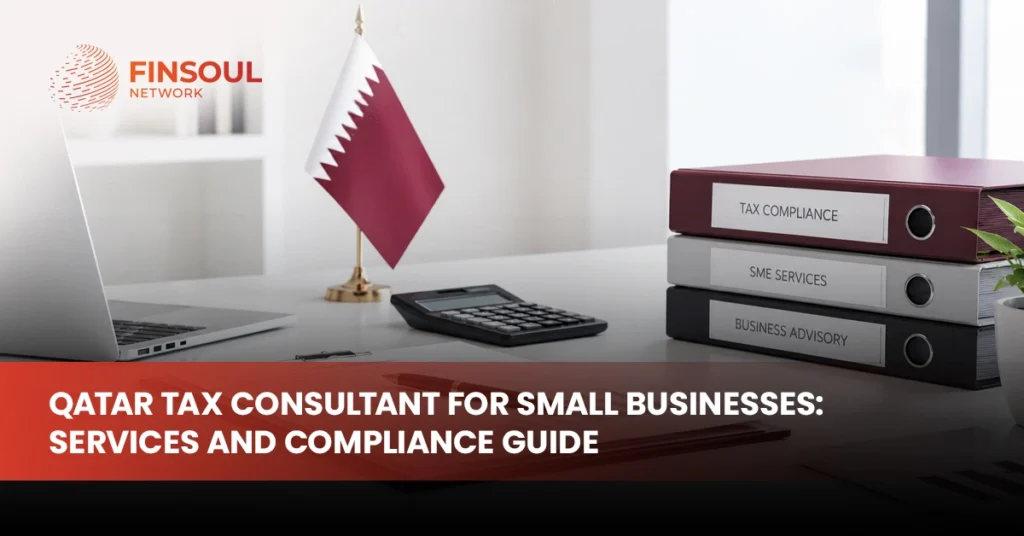
Qatar Tax Consultant for Small Businesses: Services and Compliance Guide

Managing business taxes takes time away from sales, customer service, and daily operations. Small business owners need to understand their tax position, keep expense records organised, and know which payments and transactions belong in their tax returns. A Qatar income tax consultant helps businesses calculate taxable income, prepare tax returns, manage registration, and keep financial records accurate. The right support keeps tax filing on schedule, prevents avoidable errors, and gives business owners better control over their financial obligations. Finsoul Network Qatar provides tax consultancy services covering tax registration, annual return preparation, expense reviews, and withholding tax assessments. Our team helps business owners handle these tasks with professional support suited to their company’s activities and reporting needs. Qatar Business Tax Rules: What Small Companies Need to Know Qatar’s income tax framework operates under Income Tax Law No. 24 of 2018, as amended, and is administered by the GTA. Businesses need to understand how ownership, taxable income, commercial activities, and cross-border transactions affect their tax position. The standard income tax rate is 10% of taxable income attributable to Qatar, subject to applicable exemptions and special provisions. Tax is calculated on taxable profit rather than total business revenue, with deductions and adjustments determined by the applicable rules. Ownership structure also affects tax liability. Companies with foreign ownership generally face income tax on the taxable share attributable to foreign ownership, while qualifying Qatari and GCC ownership interests receive different treatment under the applicable rules. Petroleum and petrochemical activities are subject to separate provisions. Tax Consultancy Services in Qatar for Small Businesses A professional tax consultancy service addresses the financial and administrative tasks involved in meeting Qatar’s tax requirements. The scope depends on the business’s ownership, transaction volume, industry, and existing accounting procedures. Tax Registration and Dhareeba Account Setup Businesses need to complete the applicable GTA registration procedures and obtain the required tax identification documentation. Registration deadlines generally run from the relevant commercial registration, approval to begin activities, or commencement of income generation, as prescribed by the applicable rules. A tax consultant helps prepare registration documents, submit the required information, and establish access to the Dhareeba tax platform. This support helps new businesses avoid registration delays and establish a clear starting point for tax compliance. Income Tax Calculation and Tax Planning Accurate tax calculations begin with reliable financial records. A consultant reviews revenue, operating expenses, depreciation, allowable deductions, and other relevant adjustments to calculate taxable income. For example, an IT consultancy in Doha might record employee salaries, office rent, software subscriptions, and payments to overseas developers. Each expense needs appropriate documentation and the correct tax treatment. A consultant reviews these transactions before the company finalises its taxable profit. Tax planning also helps owners assess the financial impact of expansion, new contracts, changes in ownership, and cross-border transactions. This gives management a stronger basis for budgeting and business decisions while keeping tax treatment within the law. Annual Tax Return Preparation and Filing Annual tax return preparation brings together accounting records, financial statements, tax calculations, and supporting documentation. A tax consultant checks these records, reconciles discrepancies, prepares the return, and submits the required information through Dhareeba. The general filing deadline is within four months after the end of the relevant tax year, subject to applicable rules and official extensions. For a business using the calendar year, the standard deadline generally falls at the end of April. Businesses need to confirm their specific filing dates rather than relying on previous deadlines. A consultant maintains a compliance calendar, tracks outstanding documents, and prepares the return ahead of the submission date. Withholding Tax on Overseas Payments Payments to non-resident suppliers create tax obligations that small businesses need to assess before transferring funds. Qatar generally applies 5% withholding tax to specified payments, including certain royalties, commissions, and service fees for services performed wholly or partly in Qatar, subject to applicable rules and tax treaties. A consultant reviews supplier agreements, invoices, and payment terms to determine whether withholding tax applies. The service covers calculating the applicable amount, preparing required statements, meeting payment deadlines, and maintaining supporting evidence. This is particularly relevant for businesses purchasing overseas IT services, marketing support, technical consultancy, software rights, and other covered services. Reviewing these transactions before payment helps the finance team apply the correct treatment from the outset. Tax Record Review and Audit Coordination Incomplete records create problems during tax return preparation and regulatory reviews. A consultant checks whether reported income, operating expenses, bank transactions, invoices, and financial statements agree. Where an audit is required, the consultant coordinates tax documentation with the company’s licensed auditor. This helps resolve discrepancies, organise supporting evidence, and prepare financial information for the audit process. Tax consultancy and statutory auditing remain separate services. Businesses must meet the applicable audit requirements through an appropriately licensed auditor. Qatar Tax Compliance Checklist for Small Businesses A consistent compliance process reduces last-minute work and helps owners maintain control over financial obligations. Maintain complete financial records: Keep sales invoices, supplier bills, bank statements, payroll records, contracts, and payment confirmations organised throughout the year. These documents support reported income and expenses. Track registration and filing deadlines: Record the applicable registration, return submission, and payment dates in a compliance calendar. Check GTA announcements for extensions or sector-specific requirements. Review expenses before claiming deductions: Match expenses to invoices, contracts, and payment evidence. Apply the relevant tax rules instead of treating every accounting expense as automatically deductible. Check withholding tax before overseas payments: Review the supplier’s status, the nature of the payment, where services are performed, and any applicable treaty provisions before releasing funds. Confirm audit requirements: Assess the company’s ownership structure and applicable legal requirements. Small turnover alone does not establish an exemption from statutory auditing. Monitor outstanding tax liabilities: Reconcile tax calculations with accounting records and confirm that required payments and declarations have been completed. The GTA’s Dhareeba platform provides the main channel for applicable tax registration, return filing, and related procedures. A tax consultant helps businesses keep these tasks organised and resolve missing information before deadlines. Which

SOC as a Service Qatar
Blog

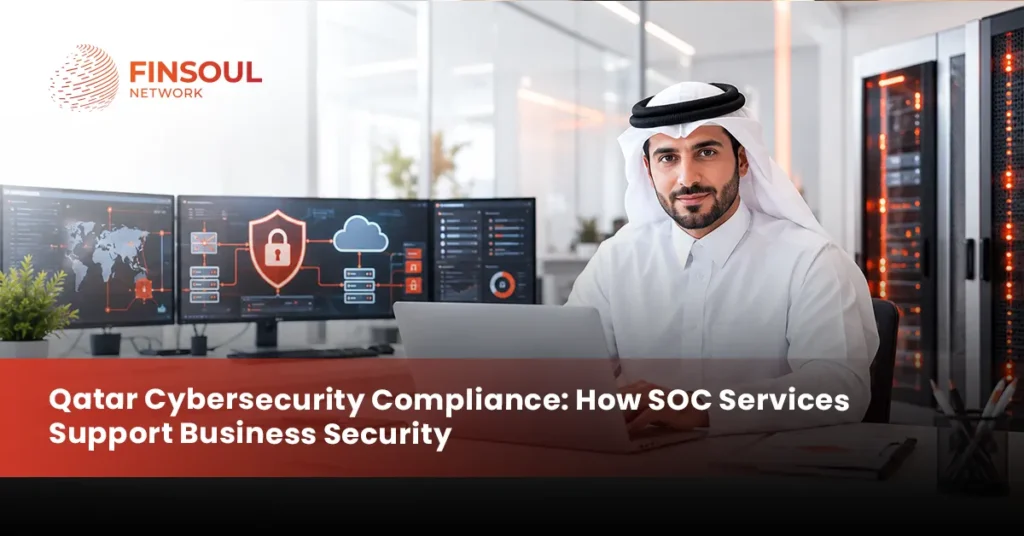
Qatar Cybersecurity Compliance: How SOC Services Support Business Security

A breach that goes unnoticed for weeks is a compliance problem before it is a technical one, because the reporting clock starts when you become aware, not when the damage is complete. Most Qatari companies already run firewalls, antivirus, and cloud security tools. Many lack a team watching those tools around the clock and acting on their alerts. Qatar regulators expect detection, response, and evidence, not just prevention. This is where SOC as a Service Qatar fits: a security operations center run by specialists, available to businesses that cannot build one in-house. Finsoul Network Qatar advises companies on how security operations support compliance, and this guide explains how it works in practical terms. What a SOC Is and What It Does A security operations center is a function that monitors an organisation’s systems for signs of attack, investigates alerts, and directs the response. Analysts review activity from servers, networks, endpoints, cloud platforms, and user accounts. When something unusual appears, they decide whether it is a real threat and act on it. A working SOC covers four tasks. Continuous monitoring of logs and security alerts Triage and investigation of suspicious activity Incident response, including containment and recovery support Reporting, which supplies the evidence that auditors and regulators ask for A security tool raises an alert. A SOC decides what the alert means and what to do next. That difference is what most compliance frameworks are actually testing. What SOC as a Service Means SOC as a Service is a model where an external provider runs security monitoring and response for your business. The provider connects to your systems, collects logs in a central platform, and staffs a team that monitors them 24 hours a day. Building an internal SOC requires analysts across three shifts, a SIEM platform, threat intelligence feeds, and ongoing training. For most small and mid-sized companies in Doha, that cost is hard to justify. A service model provides access to the same capability for a monthly fee, with the provider handling staffing and tooling. Cyber Threats Facing Businesses in Qatar Qatar’s growth in finance, energy, healthcare, and digital services has made its companies a regular target. The attacks are rarely unusual. They are common methods used against many organisations at once. Phishing and credential theft: Fake emails that collect staff passwords, often the first step in a larger breach. Ransomware: Malware that locks files and demands payment, which can stop operations for days. Business email compromise: Attackers who impersonate executives or suppliers to redirect payments. Cloud misconfiguration: Storage or accounts left open to the internet by mistake. Third-party attacks: An intruder entering through a supplier or service provider with access to your systems. Insider misuse: Staff or contractors who access data they should not. A SOC does not stop every attempt. It shortens the time between the first sign of an attack and the business responding, limiting damage and subsequent compliance exposure. Cybersecurity Compliance in Qatar: The Rules That Apply Cybersecurity compliance in Qatar isn’t governed by a single law. Several frameworks apply, depending on the sector and the type of data a business handles. National Information Assurance Standard The National Cyber Security Agency (NCSA) issues the National Information Assurance (NIA) policy. It is mandatory for government entities and critical infrastructure operators, and many private companies adopt it as a benchmark. It covers governance, data classification, technical controls, and security incident management, including coordination with Q-CERT, Qatar’s national response team. The current revision is version 2.1, effective May 2023. Personal Data Privacy Protection Law Law No. 13 of 2016 requires organisations to protect personal data with appropriate security measures. Organizations must report a data breach that could cause serious harm to the regulator and affected individuals. Published guidance sets a 72-hour window from when the company becomes aware of the breach. Qatar Central Bank Requirements Banks, insurers, and other regulated financial firms follow QCB directives covering risk assessment, incident reporting, third-party risk, and technical controls. These rules hold senior management and the board accountable, not just the IT team. Qatar Financial Centre Regulations Companies licensed in the QFC operate under the QFC Data Protection Regulations, along with other applicable requirements. The correct rulebook depends on where the entity is registered. Across all of these, three expectations repeat: know what is happening in your systems, report serious incidents on time, and keep records that prove it. How SOC Services Support Cybersecurity Compliance in Qatar Compliance frameworks ask for outcomes. A SOC produces them. The main links between the two are set out below. Detection Within Reporting Timelines You cannot report an incident you have not found. A SOC shortens the time between an attack starting and the business knowing about it. That matters when a 72-hour breach notification window is running. Structured Incident Response QCB rules expect a documented response process that has been tested. A managed SOC follows defined playbooks covering classification, containment, escalation, and communication, giving the business a ready procedure instead of improvisation. Log Retention and Audit Evidence Auditors ask for logs, incident records, and proof that alerts were reviewed. A SOC platform stores this data centrally and produces reports on request. Companies without one often spend weeks assembling evidence by hand. Support for Access and Change Monitoring Compliance frameworks require control over who accesses sensitive systems. A SOC watches for unusual logins, privilege changes, and data transfers, and flags activity that breaks policy. Regular Reporting to Management Boards and senior leaders are now expected to own cybersecurity risk. Monthly or quarterly SOC reports give them clear figures on incidents, response times, and open risks. How a SOC Handles an Incident From Alert to Report Compliance depends on what happens in the hours after something goes wrong. A managed SOC follows a fixed sequence, and each stage leaves a record. Detection and Triage The platform flags unusual activity, such as a login from an unexpected country or a large file transfer at night. An analyst reviews the alert, removes false alarms, and rates the severity.

how to do a business valuation
Blog

How to Do a Business Valuation in Qatar: Step-by-Step Guide

Selling a company, bringing in an investor, or negotiating a shareholder buyout starts with one critical question: what is your business worth? An inaccurate valuation weakens your negotiating position, affects deal terms, and costs you money. Buyers, investors, and banks expect financial evidence that supports the asking price, not an owner’s estimate. How to do a business valuation in Qatar helps business owners establish a defensible price, identify the factors driving company value, and enter negotiations with stronger financial backing. The process examines earnings, assets, liabilities, future cash flows, market comparisons, and Qatar’s ownership and tax requirements. What Business Valuation Measures A business valuation estimates a company’s economic worth at a specific date. It examines financial performance, assets and liabilities, future earning potential, market position, and the risks affecting continued operations. The result is a valuation range rather than a single figure. Different assumptions about future growth, profitability, market conditions, and risk produce different results. A professional report explains the assumptions behind the calculation and shows how they influence the final assessment. Business Value vs. Book Value vs. Market Price These three terms describe different measures of a company’s worth. Understanding the distinction helps owners set realistic expectations before negotiations begin. Book value: The net assets recorded on the balance sheet after deducting liabilities. It follows accounting rules and historical costs, so it does not necessarily reflect the company’s current economic worth. Market price: The amount a buyer and seller agree to pay in an actual transaction. Negotiating strength, financing arrangements, competition, and transaction conditions influence the final price. Business value: An estimate based on financial performance, assets, market evidence, and future earning potential. It provides a reasoned reference point for negotiations and investment decisions. When Companies in Qatar Require a Valuation Business valuation supports major financial and ownership decisions. Companies in Qatar commonly require valuations for: Selling or acquiring a business, subsidiary, or ownership stake Bringing a new investor into an existing company Buying out a departing shareholder Supporting financing discussions with banks or investors Restructuring a group or separating a business unit Assessing share transfers and related tax implications Resolving disagreements between shareholders Planning succession for a family-owned business Preparing financial statements that require fair value measurement Reviewing strategic options before expansion or restructuring Step-by-Step Business Valuation Process in Qatar The business valuation process in Qatar follows recognized valuation principles while accounting for the company’s activities, ownership structure, financial reporting obligations, and transaction requirements. Each stage builds the evidence needed to support the final figure. Step 1: Define the Purpose, Valuation Date, and Standard of Value Start by establishing why the valuation is required. A report prepared for a business sale differs from one commissioned for financial reporting, a shareholder dispute, or a tax-related transaction. The valuation date matters because company performance, market conditions, and asset values change over time. A valuation prepared before a major contract loss, ownership change, or significant increase in debt may no longer reflect the company’s position at the time of a transaction. Step 2: Collect the Financial Records Accurate financial information provides the foundation for the calculation. Prepare at least three years of financial statements where available, alongside current management accounts and supporting records. The document set typically includes income statements, balance sheets, cash flow statements, tax filings, loan agreements, lease contracts, and details of significant assets and liabilities. Complete records also reduce the time spent resolving discrepancies and help the valuer focus on the factors that directly influence business value. Step 3: Normalise Earnings Reported profit does not always reflect the earnings a new owner would receive under normal operating conditions. Owner-managed businesses often include unusual expenses, related-party transactions, or income that will not continue after a sale. Common adjustments include one-off legal costs, exceptional repair expenses, non-recurring income, and personal expenses paid through the business. Also review owner compensation when it differs materially from the market cost of hiring someone to perform the same role. Step 4: Assess the Business and Its Market Financial statements show past performance, but business value also depends on the company’s ability to sustain that performance. Review customer concentration, contract duration, supplier relationships, competitive position, employee retention, management capability, and dependence on the owner. Examine the stability of revenue and the strength of the sales pipeline. The assessment also covers industry conditions, relevant licences, regulatory obligations, and barriers to entering the market. These factors help establish realistic forecasts and identify risks that affect the company’s commercial appeal. Step 5: Select the Valuation Method Choose the valuation approach that best reflects how the business generates value. The three principal approaches are the income approach, market approach, and asset-based approach. A profitable company with predictable cash flows often suits an income-based valuation. A business with reliable comparable transactions supports a market approach, while an asset-heavy company often requires a detailed assessment of its assets and liabilities. Step 6: Perform the Calculation Apply the selected method to the adjusted financial information. Under the discounted cash flow method, the valuer forecasts future cash flows and discounts them to their present value using a rate that reflects the relevant risks. Under a market approach, the valuer applies suitable multiples from comparable companies or transactions to an appropriate financial measure. An asset-based calculation identifies the relevant assets and liabilities and estimates their appropriate values under the selected valuation basis. Step 7: Assess Control, Marketability, and Other Adjustments Ownership rights and the ability to sell an interest influence a shareholding’s value. A controlling interest gives its holder greater influence over company decisions than a minority stake. A minority interest often carries restrictions on voting, distributions, or exit options. Shares in a private company also differ from publicly traded shares in terms of liquidity. These differences do not justify automatic discounts or premiums in every valuation. The valuer considers the valuation standard, the rights attached to the interest, the transaction circumstances, and available market evidence. Step 8: Prepare and Review the Valuation Report The final report brings the evidence, assumptions, calculations, and

financial due diligence services Qatar
Blog

Financial Due Diligence in Qatar: Checklist, Process & Key Risks

Financial due diligence in Qatar gives buyers and investors a clear picture of a company’s financial health before an acquisition, merger, or investment. It assesses the accuracy of reported earnings, cash flow strength, outstanding liabilities, and financial commitments that determine a business’s true value. A thorough review establishes what the company earns, what it owes, and whether its financial performance supports the proposed transaction price. Strong revenue and reported profits do not always reflect a business’s true financial position. Declining margins, overdue receivables, unrecorded liabilities, and rising operating costs can undermine profitability and increase acquisition costs. Examining financial statements alongside accounting records, customer contracts, tax filings, debt agreements, and operating expenses exposes these issues and gives decision-makers a reliable basis for evaluating the investment. This guide covers the financial due diligence checklist, review process, and key risks in Qatar. It explains how buyers assess earnings quality, working capital, tax exposure, employee-related costs, and financial forecasts to determine business value, negotiate transaction terms, and plan for sustainable growth. What Is Financial Due Diligence in Qatar? Financial due diligence systematically examines a company’s financial performance, assets, liabilities, cash flow, and future financial commitments before a business transaction. It tests the accuracy of financial information and determines whether reported earnings reflect the company’s actual operating performance. The review goes beyond reading annual accounts. It traces material figures to supporting documents, investigates unusual movements, and evaluates the assumptions behind the company’s financial forecasts. The findings establish a clearer picture of its earnings quality, liquidity, debt exposure, and financial sustainability. In Qatar, financial due diligence is relevant to several types of transactions: Business acquisitions: Assessing the financial position of a target company before agreeing on a purchase price. Mergers and joint ventures: Evaluating the financial strength, liabilities, and commercial commitments of each participating business. Private investment: Testing earnings, cash generation, and growth assumptions before committing capital. Corporate restructuring: Identifying underperforming operations, high costs, and financial obligations. Business expansion: Evaluating funding requirements, operating capacity, and the financial implications of entering new markets. Why Is Financial Due Diligence Important Before a Business Acquisition? An acquisition transfers economic opportunities and financial obligations. Buyers need to understand what the business earns, how reliably it generates cash, and which liabilities affect the investment’s value. How Does Financial Due Diligence Establish the True Value of a Business? A seller’s asking price reflects projected growth, historical profits, and expectations about future performance. Financial due diligence tests these assumptions against accounting records, customer contracts, payment history, and operating costs. The review also separates sustainable operating earnings from one-off gains, exceptional expenses, and accounting adjustments. Buyers use this information to evaluate maintainable earnings and determine whether the proposed valuation reflects the business’s underlying performance. How Does Financial Due Diligence Reveal Hidden Liabilities? Financial statements do not always communicate the full financial impact of outstanding obligations. Guarantees, legal disputes, tax assessments, unpaid supplier balances, and employee-related commitments require examination alongside recorded liabilities. Reviewing contracts, correspondence, payment records, and supporting schedules reveals obligations that affect the transaction’s economics. Quantifying these exposures gives buyers a stronger basis for purchase price negotiations, contractual protections, and post-acquisition financial planning. Why Does Cash Flow Matter More Than Reported Profit Alone? Profit measures financial performance under the applicable accounting framework, while cash flow shows how money moves into and out of the business. A company can report strong profits yet still face liquidity pressure when customers pay late, inventory builds up, or suppliers demand faster payment. Financial due diligence compares operating profits with cash generated from operations. It investigates persistent differences and establishes the working capital required to sustain normal business activity. What Documents Are Required for Financial Due Diligence in Qatar? The quality of financial due diligence depends on the completeness and accuracy of the records the target company provides. Missing documents delay verification, create uncertainty about liabilities, and weaken the valuation basis. Buyers typically request the following records. Document category Records to review Purpose Financial statements Three to five years of audited accounts, management accounts, and trial balances Verify historical performance and financial position Revenue and sales Customer contracts, invoices, credit notes, and sales reports Test revenue accuracy and earnings quality. Cash and banking Bank statements, reconciliations, and facility agreements Confirm cash balances, borrowing, and liquidity. Working capital Receivables aging, inventory reports, and supplier balances Assess operating funding requirements. Taxation Tax returns, assessments, payment records, and tax correspondence Identify tax exposure and unresolved obligations. Employees Payroll registers, employment contracts, leave balances, and benefit schedules Establish workforce costs and employee liabilities. Legal and contractual Leases, guarantees, litigation records, and major agreements Identify commitments affecting financial value. Forecasts Budgets, cash flow projections, and capital expenditure plans Test future earnings and funding requirements. How Should Buyers Handle Missing or Inconsistent Financial Records? Missing records require targeted investigation rather than assumptions about the company’s financial position. If an invoice does not support a material revenue balance, the review team needs alternative evidence, such as a customer contract, delivery confirmation, payment receipt, or subsequent settlement. Inconsistent figures also require reconciliation. Management accounts, audited statements, bank records, and tax filings must reconcile and include documented explanations for differences. An unresolved material discrepancy becomes a transaction risk. Buyers can request additional evidence, revise financial assumptions, negotiate appropriate protections, or reconsider the proposed valuation. The findings report must distinguish verified figures from estimates and unresolved matters. How Is Quality of Earnings Calculated During Financial Due Diligence? Quality of earnings analysis examines how much of a company’s reported profit comes from sustainable operating activities. It is central to financial due diligence because buyers often value businesses using earnings-based methods. The analysis starts with reported earnings and investigates adjustments that affect the company’s maintainable operating performance. Common adjustments include: Non-recurring income: Gains from asset disposals or exceptional transactions that do not represent normal trading performance. Exceptional expenses: Unusual costs that are genuinely non-recurring and supported by evidence. Owner-related expenses: Personal or discretionary expenses recorded through the business, where applicable and properly substantiated. Accounting adjustments: Errors, changes in accounting

workforce management in Qatar
Blog

Workforce Management in Qatar: A Complete Guide for Businesses in 2026

Efficiently managing employees is essential to control operating costs, maintain productivity, and support business growth. For companies in Qatar, workforce challenges often extend beyond recruitment. Payroll administration, employee records, attendance tracking, performance reviews, and staffing requirements all demand consistent management. Without structure, businesses face unnecessary administrative work, inconsistent employee performance, and difficulty controlling labor costs. Workforce management in Qatar helps businesses organize their employees, improve HR operations, and align staffing decisions with commercial objectives. A structured approach gives management better control over workforce planning, employee administration, and performance while letting internal teams focus on core business activities. Finsoul Network Qatar provides HR services that support recruitment, payroll processing, employee management, training and development, performance management, and organizational development. Businesses looking to improve their HR operations can use professional support to address administrative gaps, establish consistent procedures and build a workforce structure that supports long-term growth. What Does Workforce Management in Qatar Involve? Workforce management covers the processes businesses use to plan staffing needs, manage employees, monitor productivity, and control labor-related expenses. It connects recruitment, scheduling, payroll, performance management, and workforce planning within a consistent operational framework. The requirements depend on the business. A hospitality company in Doha needs reliable shift scheduling and sufficient staff coverage during busy periods. A construction business needs to coordinate project teams, monitor attendance and plan labour requirements around project deadlines. A professional services firm might focus on recruitment, employee performance, payroll administration, and skills development. Workforce Planning and Employee Allocation Workforce planning helps businesses determine how many employees they need, which skills are essential, and where they need to recruit. Managers assess current staffing levels, upcoming projects, workload patterns, and business expansion plans before making hiring decisions. Without proper planning, companies often recruit reactively or allocate employees inefficiently. These problems increase costs and place additional pressure on existing teams. A structured workforce plan helps management anticipate staffing needs, identify skill shortages, and allocate resources based on business priorities. Attendance, Scheduling and Payroll Administration Attendance management records working hours, absences, overtime, and shift changes. Scheduling ensures sufficient employee coverage across departments and operating hours, while payroll administration uses accurate employee and attendance information to support salary processing. These functions require coordination between HR, finance, and department managers. Missing attendance records, delayed approvals and outdated salary information create payroll discrepancies and unnecessary administrative work. Standardized procedures and appropriate HR technology help businesses maintain accurate records, improve coordination, and reduce repetitive manual tasks. Employee Performance and Development Performance management establishes expectations, measures employee contributions and identifies areas for improvement. Managers use performance reviews, measurable targets, and employee feedback to assess results and identify training needs. Training programs then address specific skills gaps and prepare employees for greater responsibilities. This approach supports productivity, strengthens internal capabilities and helps businesses make better use of their existing workforce. Why Do Businesses in Qatar Need Professional Workforce Management Services? As businesses expand, workforce administration becomes more demanding. Managing recruitment, employee documentation, payroll, and performance reviews internally takes time, requires the right systems, and demands experienced HR personnel. Professional workforce management services help businesses address these requirements through structured processes and specialist support. Control Labor Costs Without Compromising Productivity Labor costs include salaries, allowances, overtime, recruitment, and employee replacement expenses. Poor scheduling, excessive overtime and unnecessary recruitment increase these costs without guaranteeing better results. Professional workforce planning helps management evaluate staffing requirements against actual workloads. Businesses gain a clearer view of resource utilization, allowing them to address staffing gaps and reduce avoidable expenditure. For example, a company experiencing frequent overtime should review its shift allocation, workload distribution, and staffing levels before increasing its payroll budget. A structured assessment helps identify the underlying problem and determine an appropriate response. Improve HR Administration and Operational Efficiency Manual employee administration takes time away from business development, service delivery, and operational planning. Disconnected spreadsheets, inconsistent records and unclear approval procedures also increase the risk of errors. Professional HR support establishes consistent processes for employee documentation, attendance, leave administration, and payroll coordination. Clear responsibilities reduce delays and help management access the information required for operational decisions. Strengthen Employee Retention and Performance Employee dissatisfaction often develops through recurring workplace problems, including unclear responsibilities, inconsistent policies, payroll errors, and limited development opportunities. Effective employee management in Qatar helps businesses establish fair procedures for performance reviews, employee feedback, leave requests, and professional development. Managers also gain better insight into recurring retention problems and gaps in employee performance. Addressing these issues helps businesses maintain workforce stability, reduce recurring recruitment costs, and improve operational consistency. How Does Human Resource Management in Qatar Support Business Growth? Human resource management covers the policies and processes that govern recruitment, onboarding, employee relations, training, performance, and retention. For growing businesses, a structured HR function establishes clear responsibilities and consistent employment practices across departments. Recruitment and Talent Acquisition Recruitment requires more than advertising vacancies. Businesses need clear job descriptions, appropriate candidate screening, structured interviews, and a defined selection process. Professional recruitment support helps businesses identify suitable candidates and align hiring activities with operational requirements. This is especially useful when you need to fill several vacancies quickly or when internal teams lack dedicated recruitment resources. A well-defined recruitment process also improves onboarding by ensuring new employees understand their responsibilities, reporting relationships, and performance expectations. Payroll Processing and Employee Administration Payroll accuracy depends on reliable employee information, approved attendance records and consistent processing procedures. Businesses also need to maintain appropriate documentation and review their payroll arrangements against applicable Qatar requirements. Professional payroll support helps organize salary information, coordinate relevant records, and establish checks within the payroll workflow. Businesses maintain oversight of payments and legal responsibilities while reducing the administrative burden on internal teams. Employee administration also includes maintaining contracts, leave balances, personnel records and relevant employment documentation. Organized records improve access to information and support consistent HR decisions. Training, Performance Management and Organizational Development Employee development helps businesses address skills gaps, improve performance and prepare employees for greater responsibilities. Training programs need clear objectives and a direct connection to

logistics consultants in Qatar
Blog

How Logistics Consultants in Qatar Help Businesses Reduce Transportation Costs

Transportation costs affect profit margins, delivery schedules, inventory levels, and customer satisfaction. For businesses operating in Qatar, expenses can increase through inefficient delivery routes, underused vehicles, rising fuel consumption, delayed shipments, poor warehouse coordination, and avoidable freight charges. Without a review of these costs, businesses often spend more on transportation than their operations require. Logistics consultants in Qatar help businesses identify these expenses, improve transportation planning, and establish cost-effective supply chain processes. They examine how goods move from suppliers to warehouses, distribution centres, and customers, then recommend practical changes that reduce waste without compromising delivery performance. For manufacturers, retailers, wholesalers, e-commerce businesses, and importers, effective logistics management creates better control over transportation spending. The right approach also helps businesses manage growing order volumes, improve delivery reliability, and use existing resources. Why Are Transportation Costs High for Businesses in Qatar? Transportation expenses involve more than fuel and vehicle maintenance. Several operational problems can increase the cost of moving goods across Qatar and through international supply chains. Inefficient Delivery Routes Poor route planning increases driving distances, fuel consumption, vehicle wear, and delivery times. Multiple trips to nearby locations, unnecessary return journeys, and poorly sequenced deliveries add avoidable costs to daily operations. Low Vehicle Utilisation Businesses lose money when trucks and delivery vehicles travel with unused capacity. Sending partially loaded vehicles, making separate trips for nearby customers, or failing to coordinate shipments increases the cost per delivery. High Fuel and Maintenance Expenses Fuel consumption rises when drivers follow inefficient routes, vehicles remain idle, or fleets lack proper maintenance schedules. Unexpected repairs also disrupt delivery plans and may force businesses to arrange expensive replacement vehicles. Delays at Ports, Warehouses, and Delivery Points Importers and distributors can face additional expenses when shipments arrive before warehouse space is available or when receiving arrangements are incomplete. Delays can lead to storage charges, demurrage, detention fees, and missed delivery windows. Poor Inventory and Transportation Coordination When inventory records do not match actual stock levels, businesses may arrange unnecessary shipments, make emergency deliveries, or move goods between locations repeatedly. These activities increase transportation spending and create additional pressure on warehouse teams. Logistics consultants in Qatar assess these issues together instead of treating each expense as an isolated problem. This approach helps businesses identify the underlying causes of high transportation costs and prioritise changes with measurable financial benefits. How Do Logistics Consultants in Qatar Reduce Transportation Costs? Logistics consultants review transportation operations, analyse spending patterns, and recommend improvements based on business requirements. Their work focuses on reducing avoidable expenses while maintaining delivery standards. 1. Optimising Delivery Routes Route optimisation helps businesses reduce unnecessary mileage, fuel consumption, and driver hours. Consultants examine delivery locations, traffic patterns, shipment volumes, delivery windows, and vehicle capacity to build more efficient routes. For example, a distributor delivering products to several retailers in Doha may assign nearby customers to the same delivery run instead of sending separate vehicles throughout the day. A better delivery sequence reduces repeated travel and allows the business to complete more deliveries with its existing fleet. Consultants can also assess route-planning software, delivery scheduling tools, and GPS tracking systems to improve daily coordination. 2. Improving Vehicle and Load Utilisation Every vehicle carries operating costs, regardless of how much cargo it transports. Improving load utilisation reduces the cost of moving each shipment. Logistics consultants examine order sizes, vehicle capacity, shipment frequency, and delivery schedules to identify opportunities for load consolidation. They may recommend combining compatible shipments, adjusting dispatch times, or assigning vehicles according to cargo volume and delivery requirements. Businesses can then reduce partially loaded trips, improve fleet productivity, and control the number of vehicles required for routine deliveries. 3. Reviewing Freight Rates and Carrier Contracts Businesses that depend on third-party transport providers need clear visibility into freight rates and service charges. Differences in pricing structures, minimum shipment charges, fuel surcharges, and additional handling fees can affect total transportation expenditure. Logistics consulting in Qatar includes reviewing carrier contracts, comparing service providers, and examining actual shipment costs. Consultants can help businesses negotiate better commercial terms, select appropriate service levels, and establish performance requirements for transport partners. The objective is to assess the full cost of each service rather than choosing a provider based only on its advertised rate. 4. Reducing Port and Shipment-Related Delays Importers can incur additional expenses when customs documentation is incomplete, cargo collection is delayed, or warehouse teams are unprepared to receive shipments. These problems can create storage charges, vehicle waiting time, and delivery disruptions. Consultants review shipment planning, documentation workflows, clearance coordination, and communication between suppliers, freight forwarders, customs representatives, and warehouse teams. For businesses moving cargo through Hamad Port or receiving international shipments through other channels, better coordination helps reduce preventable delays and additional handling costs. Consultants also help establish clear responsibilities and escalation procedures for shipments that fall behind schedule. 5. Improving Warehouse and Distribution Planning Warehouse operations have a direct effect on transportation expenses. Poor stock placement, slow order preparation, and inefficient dispatch schedules can delay vehicles and create unnecessary trips. Logistics consultants assess warehouse locations, picking and packing processes, dispatch arrangements, and the relationship between inventory availability and delivery planning. They may recommend grouping orders by delivery area, preparing shipments before vehicle arrival, improving loading sequences, or reviewing the location of distribution facilities. For businesses serving customers across Doha, Lusail, Al Wakrah, Al Rayyan, and other areas, effective distribution planning helps control travel time and improve delivery coordination. 6. Using Logistics Data to Control Spending Transportation data helps businesses understand where money goes and which operational changes will produce the greatest savings. Consultants establish key performance indicators (KPIs) such as: Cost per delivery: Total delivery expenditure divided by completed deliveries. Cost per kilometre: Transportation cost measured against distance travelled. Vehicle utilisation: The proportion of available vehicle capacity being used. On-time delivery rate: The percentage of deliveries completed within the agreed timeframe. Fuel consumption: Fuel used across vehicles, routes, or delivery operations. Empty-mile rate: The proportion of vehicle distance travelled without cargo. How Can Logistics Consulting

Qatar Pillar Two Rules 2026
Blog

Qatar Pillar Two Rules 2026: What the New Global Minimum Tax Decisions Mean for Multinational Companies.

Qatar’s Pillar Two rules have moved from a framework on paper to an active compliance requirement for multinational enterprise groups operating in the country. The Qatar Global and Domestic Minimum Tax framework introduces a 15% minimum effective tax rate for qualifying multinational groups and applies to fiscal years beginning on or after 1 January 2025. The 2026 developments make the rules more practical for businesses. Qatar has issued detailed rules covering registration, reporting, currency conversion, transitional CbC safe harbour, non-material constituent entities, and the appointment of a Designated Local Entity. The General Tax Authority has also launched Pillar Two registration through the Dhareeba platform. For multinational companies with Qatar operations, the focus now needs to move beyond understanding the Qatar global minimum tax 2026 framework. Businesses need to establish whether they fall within scope, complete the required registration, assess their potential top-up tax exposure, organise group-level data, and meet the applicable reporting deadlines. What Are the Qatar Pillar Two Rules 2026? Qatar’s Pillar Two framework implements the OECD/G20 global minimum tax rules for large multinational enterprise groups. It is governed by Law No. 22 of 2024 and Council of Ministers Resolution No. 2 of 2026, which sets out the rules for applying Qatar’s Global and Domestic Minimum Taxes. The framework applies to MNE groups with consolidated annual revenue of at least EUR 750 million in at least two of the four preceding fiscal years. The rules are effective for fiscal years commencing on or after 1 January 2025. The main objective is to ensure that qualifying multinational groups pay an effective tax rate of at least 15% on relevant profits. Where the effective tax rate falls below the minimum rate, a top-up tax mechanism brings the tax level up to 15%. Qatar applies two main mechanisms: Domestic Minimum Top-Up Tax (DMTT): Applies to qualifying Qatar-based constituent entities and relevant joint ventures. Income Inclusion Rule (IIR): Applies to certain parent entities located in Qatar in relation to lower-taxed entities within the group. The framework operates alongside Qatar’s existing income tax system. It does not replace the existing corporate income tax rules. Who Is Subject to Qatar’s Global Minimum Tax? The first question for any multinational business is if its group meets the Pillar Two revenue threshold. The EUR 750 million test is assessed at the group level, rather than by looking only at the revenue of an individual Qatar company. This means a Qatar subsidiary with substantially lower revenue may still fall within the Pillar Two compliance framework when it belongs to a qualifying international group. The rules cover: Qatar-headquartered multinational groups with overseas operations Foreign-headquartered multinational groups with Qatar entities Qualifying Qatar constituent entities Certain joint ventures and their subsidiaries Parent entities in Qatar that fall within the IIR rules Purely domestic Qatar groups that do not form part of an in-scope MNE group are outside the Pillar Two framework. Companies operating through Qatar Financial Centre, Qatar Free Zones, Qatar Science and Technology Park, and Media City also need to assess their position when they form part of an in-scope group. How Does the 15% Global Minimum Tax Work in Qatar? The 15% minimum effective tax rate sits at the centre of Qatar’s Pillar Two rules. The calculation is not simply a comparison between the standard Qatar income tax rate and 15%. Pillar Two uses the GloBE framework to determine covered taxes, adjusted income, effective tax rates, and any resulting top-up tax. Where the relevant effective tax rate falls below 15%, the applicable mechanism calculates additional tax to bring the effective rate up to the minimum level. Domestic Minimum Top-Up Tax The Qatar domestic minimum top-up tax applies to qualifying profits earned by constituent entities located in Qatar. The DMTT allows Qatar to collect the applicable top-up tax on low-taxed Qatar profits rather than leaving the additional tax to another jurisdiction. For multinational groups with Qatar operations, this makes the local assessment an important part of the group’s wider Pillar Two calculation. Businesses therefore need reliable information on: Qatar adjusted income Covered taxes Permanent differences Temporary differences Eligible tax credits Payroll and tangible asset information Ownership structures Entity-level financial data The DMTT forms one of the two main charging mechanisms under Qatar’s Pillar Two framework. Income Inclusion Rule The Income Inclusion Rule (IIR) applies to qualifying parent entities located in Qatar. Under the IIR, a parent entity may become responsible for top-up tax associated with lower-taxed constituent entities located outside Qatar, subject to the rules and applicable conditions. This means Qatar-headquartered groups need to assess their international subsidiaries and not only their Qatar operations. The IIR therefore makes Pillar Two a group-wide tax exercise rather than a calculation limited to the Qatar company’s local financial statements. What Changed With Qatar’s 2026 Pillar Two Decisions? The major development in 2026 is the introduction of detailed implementing decisions that turn the broader framework into operational compliance requirements. The General Tax Authority issued six implementing decisions in May 2026, which were published in the Official Gazette on 27 August 2026. They apply to fiscal years beginning on or after 1 January 2025. The six decisions address: 2026 Decision Main Area Decision 17 Currency conversion rules Decision 18 Simplified reporting procedures Decision 19 Transitional CbC reporting safe harbour Decision 20 Simplified calculations for non-material constituent entities Decision 21 Appointment of a Designated Local Entity Decision 22 Registration requirements These decisions matter because multinational groups now have clearer administrative requirements around registration, reporting and data preparation. Qatar Pillar Two Registration Requirements The General Tax Authority launched the Pillar Two registration service through the Dhareeba platform on 2 August 2026. Registration is mandatory for in-scope MNE groups and qualifying joint venture groups with a relevant Qatar presence. Registration is required even when the group expects no top-up tax liability. The registration process requires businesses to provide core group information and identify the relevant entities. Companies need to prepare information such as: Ultimate Parent Entity details Qatar constituent entity information Group structure Designated Local Entity details

Scroll to Top