

Author name: waseem1

Professional Tax Advisors in qatar
Blog

Tax Compliance in Qatar: Why Businesses Need Professional Tax Advisors

  Tax compliance in Qatar involves more than submitting an annual tax return. Businesses need to understand their registration obligations, maintain accurate accounting records, calculate taxable income correctly, prepare supporting documents, meet filing deadlines, and respond properly to requirements from the General Tax Authority (GTA).   The tax framework also applies to businesses that do not ultimately owe tax. The GTA has confirmed that companies and entities holding a Commercial Registration or trade license, including tax-exempt entities, must submit tax returns through the Dhareeba platform within the applicable deadlines. For the 2025 tax year, the standard filing period ran from January 1 to April 30, 2026, before the GTA extended the deadline to June 30, 2026, for eligible taxpayers.   Professional Tax Advisors in Qatar help companies manage tax registration, accounting information, tax calculations, return preparation, documentation, and communication with the GTA while keeping compliance aligned with Qatar’s tax regulations.   What Does Tax Compliance in Qatar Involve? Tax compliance in Qatar covers the practical responsibilities a business must manage under the country’s tax framework. The exact obligations depend on the company’s ownership structure, activities, income, transactions, and applicable tax rules. For many businesses, compliance includes: Completing Qatar tax registration through the Dhareeba Tax Portal Obtaining and maintaining the relevant Tax Identification Number (TIN) Maintaining accurate accounting records and supporting documents Identifying taxable income correctly Preparing and submitting annual tax returns Calculating tax liabilities accurately Meeting tax payment deadlines Managing withholding tax obligations where applicable Maintaining documentation for related transactions Responding to GTA queries, assessments, or requests for information The GTA states that taxpayers conducting business activities in Qatar are required to maintain accurate and detailed accounting records, books, and documents in accordance with applicable Qatar laws and international accounting standards.   Qatar Tax Registration Is the Starting Point A business cannot manage its tax obligations properly without establishing its tax registration status first. Qatar tax registration is completed through the Dhareeba Tax Portal, where taxpayers can register and obtain a Tax Identification Number. Tax registration also establishes the foundation for future filings and communication with the GTA. Businesses need accurate corporate, ownership, financial, and registration information when setting up their tax profile. Why Businesses Need Professional Tax Advisors in Qatar Tax regulations involve financial records, legal requirements, filing procedures, calculations, and supporting documentation. Managing all of these internally without specialist knowledge creates unnecessary compliance risks. Professional tax advisors bring specialised knowledge of Qatar’s tax framework and help businesses handle their obligations accurately and on time. Accurate Tax Registration and Classification The first step is understanding how the business fits into Qatar’s tax system. Ownership structure, business activity, residency, source of income, and the nature of transactions all affect the company’s tax position. A professional advisor reviews the business structure and establishes the relevant registration and filing requirements. This gives the company a clear basis for managing its tax obligations instead of relying on assumptions about exemptions or tax liability. Correct Tax Calculations Qatar’s standard income tax rate is 10% of taxable income, while specific rules apply to petroleum and petrochemical activities and certain international tax arrangements. The Income Tax Law also provides rules covering withholding tax and other tax matters. Calculating taxable income requires more than applying a percentage to accounting profit. Businesses need to review income, deductible expenses, adjustments, exemptions, and supporting records before finalising their tax position. Professional Tax Advisors in Qatar review these calculations and help businesses prepare a defensible tax position supported by proper documentation. Timely Tax Return Filing Tax return deadlines are a core part of compliance. The GTA states that income tax returns are generally submitted within four months following the end of the tax year through Dhareeba. The GTA has also repeatedly reminded companies that holding a Commercial Registration or licence does not remove the obligation to file. Its 2026 filing announcement specifically covered tax-exempt companies and companies owned by Qatari or GCC nationals. Professional advisors establish filing calendars, organise required information, prepare returns, and track deadlines so businesses do not leave compliance until the last minute. Professional Advisors Help Maintain Proper Tax Records Tax compliance depends heavily on the quality of a company’s financial records. Incomplete books, unreconciled accounts, missing invoices, unsupported expenses, or inconsistent financial information make tax preparation more difficult and increase the risk of errors. Businesses need records that clearly support their reported income and expenses. This includes invoices, contracts, bank records, payroll information, expense documentation, asset records, and other relevant financial evidence. Dhareeba Filing Requires Accurate Information Dhareeba is the electronic tax platform used by the GTA for tax-related services, including tax registration and return submission. The platform has become a central part of Qatar’s tax administration. The GTA reported that the tax return filing compliance rate for the 2025 tax year reached 90%, reflecting continued efforts to strengthen tax administration and improve digital tax services through Dhareeba. Using the platform is only one part of compliance. The information submitted through it must match the company’s accounting records and supporting documentation. Professional advisors handle the preparation behind the filing. They review financial data, identify relevant tax adjustments, prepare the return, and ensure the submitted figures are properly supported. Tax Compliance Covers More Than Income Tax Businesses focus on annual income tax returns and overlook other tax responsibilities. Depending on the nature of the business and its transactions, companies also need to consider withholding tax, capital gains tax, tax treaty provisions, and other applicable requirements. Qatar’s tax framework includes a 5% final withholding tax on certain payments to non-residents where the relevant conditions apply. Capital gains also have specific registration, declaration, and payment requirements. The GTA states that certain capital gains tax returns and related payments must be handled within 30 days of the relevant contract or disposal. A professional advisor reviews the company’s transactions looking only at its annual accounts. This approach helps identify tax obligations connected with cross-border payments, asset disposals, contracts, and other transactions. Professional Tax Advisors Help With Tax Authority Communication Businesses sometimes

corporate tax return in qatar
Blog

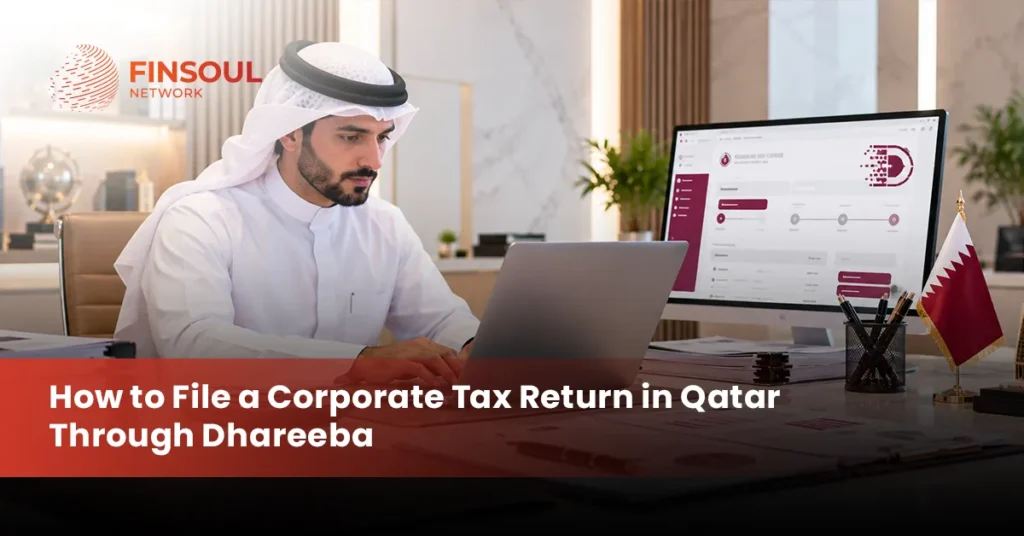
How to File a Corporate Tax Return in Qatar Through Dhareeba

A company can be exempt from corporate tax in Qatar and still have a tax filing obligation. That distinction catches many businesses off guard. Qatari-owned companies assume that tax exemption means they skip the return altogether. In practice, businesses with a commercial registration must meet their filing requirements through the Dhareeba portal, even when no corporate tax is payable. Finsoul Network Qatar helps businesses manage these requirements and avoid the delays, errors, and compliance issues that can come with incorrect filings. This guide explains how to complete your corporate tax return in Qatar through Dhareeba, from preparing the required information to submitting the return correctly. What the Dhareeba Portal Does for Qatar Taxpayers Dhareeba is the General Tax Authority’s official online tax system, accessible at dhareeba.gov.qa. It replaced paper-based filing and now handles taxpayer registration, return submission, payments, and penalty resolution in one place. Access runs through the National Authentication System, using your Qatar ID credentials rather than a separate login. Once registered, you file each subsequent year through the same account, tied to a permanent Tax Identification Number issued at registration. Who Needs to File a Corporate Tax Return in Qatar Corporate tax in Qatar applies on a territorial basis, meaning income earned from Qatari sources is taxable regardless of where the company is incorporated. The standard rate sits at 10 percent on the foreign-owned share of profits. Filing, however, is not limited to companies that actually owe tax. Many businesses get this part wrong. Foreign-owned companies, branches, and joint ventures pay the standard 10 percent rate on Qatari-sourced profits. Wholly Qatari-owned and GCC-owned companies are generally exempt from the tax itself but must still submit an annual return. Every entity with a commercial registration or trade license must file, even if it had zero activity during the year. Companies with annual revenue above QAR 500,000 must attach audited financial statements to the return. If your company has a CR, Dhareeba expects a return. No activity threshold excuses filing, and “we had no income” is not an accepted reason to skip a submission. Registering on Dhareeba Before You Can File You can’t submit a return until the company is registered and has a valid Tax Identification Number. You must register within 60 days of receiving the commercial registration or generating the first taxable income, whichever comes first. Businesses that skip this step often discover it only when they try to file, and the system blocks them. Step 1: Create Your Account Through NAS Log in to the portal using your QID through the National Authentication System, then select self-registration and enter the company’s commercial registration number, business activity, and contact details. Step 2: Set the Accounting Period Most companies default to a January to December accounting year unless the GTA has separately approved a different period. This period determines when your annual return becomes due, so confirm it’s set correctly before moving forward. Step 3: Receive the Tax Identification Number Once the GTA reviews and approves the registration, it issues a TIN. This number is permanent and required for every return, payment, and piece of correspondence, so keep it on file somewhere accessible. Step-by-Step Guide to Filing Corporate Tax in Qatar Once registered, corporate tax filing in Qatar follows a fairly consistent annual sequence. None of these steps are complicated on their own, but skipping the order usually causes a delay. Step 1: Log In and Open the Tax Returns Section From the Dhareeba dashboard, go to the tax returns or declarations section and select the annual corporate income tax return relevant to your accounting period. Step 2: Enter Your Financial Figures Fill in taxable income, allowable deductions, and expenses exactly as required by the GTA’s return format. Figures need to match your underlying accounting records, since mismatches are one of the most common reasons the GTA follows up with a query. Step 3: Attach Supporting Documents Companies above the QAR 500,000 revenue threshold must upload audited financial statements. Smaller companies eligible for the simplified return, available through the Dhareeba app for qualifying businesses, may skip this requirement entirely. Step 4: Review Everything Before Submitting Check every figure against your financial statements before hitting submit. Once filed, corrections go through a separate amendment process rather than a quick in-place edit, so a careful review here saves time later. Step 5: Submit and Keep Proof Submit the return electronically and save the confirmation receipt. This becomes your evidence of timely filing if the GTA ever asks for it. Deadlines to Know for Your Qatar Corporate Tax Return in 2026 Standard deadlines run four months after the financial year ends, which places most calendar-year companies at an April 30 deadline. For the 2025 financial year specifically, the GTA extended the deadline for returns covering the period ending December 31, 2025, from April 30 to June 30, 2026. Deadlines can shift year to year based on GTA announcements, so checking the current notice on the Dhareeba portal before assuming last year’s date still applies is worth the five minutes it takes. A deadline that applied last year isn’t guaranteed to repeat. Documents to Prepare Before You Start Filing Having the right paperwork ready before you log in saves a lot of back-and-forth once the filing window opens. Commercial registration and trade license details Audited financial statements, where revenue exceeds QAR 500,000 Records of income, expenses, and deductions for the accounting period Details of any cross-border payments subject to withholding tax Prior year’s TIN and return confirmation, for reference Keeping these organized throughout the year, rather than assembling them in the final week before the deadline, is what separates a smooth filing from a rushed, error-prone one. Dhareeba Portal vs Dhareeba App: Which One to Use The Dhareeba portal is the full system, built for the complete annual return with supporting documentation. The Dhareeba app offers a simplified filing path for companies that meet specific conditions set by the GTA, usually smaller entities with straightforward finances and no audit requirement. If your

market research companies in Qatar
Blog

Why Is Market Research Important Before Starting a Business in Qatar?

  Qatar offers strong opportunities for businesses across sectors, but a promising market does not automatically make every business idea viable. Before committing capital to premises, staff, inventory, marketing, or licensing, founders need to know who will buy, what they will pay, who they will compete with, and where the real demand exists. That is where market research becomes a business tool, not just a planning exercise. Working with market research companies in Qatar can provide the market data needed to test your idea, assess the competition, set realistic pricing, and make better investment decisions before major costs begin. Finsoul Network Qatar helps businesses assess these factors before launch, giving founders a stronger basis for deciding where to invest and how to enter the Qatari market. What Market Research Actually Means Market research is the process of gathering information about your target customers, competitors, and industry conditions before making a business decision. It answers questions like who will actually buy what you’re selling, how much they’re willing to pay, and who else is already selling something similar. This isn’t the same as having a strong opinion about your idea or asking a few friends what they think. It means collecting real data through surveys, interviews, competitor analysis, or published industry reports, and using that data to shape decisions rather than guesswork. Why Market Research Matters Before Launching in Qatar Qatar’s market has its own particular shape, and assumptions that work elsewhere in the Gulf don’t always transfer cleanly here. The Local Market Has Its Own Rules Consumer habits, pricing expectations, and even preferred payment methods in Qatar can differ from neighbouring markets like the UAE or Saudi Arabia. A business plan copied from a successful venture in another GCC country can miss the mark entirely without local validation. Competition Is Often Underestimated New entrants frequently assume a gap in the market exists simply because they haven’t personally seen a competitor. Proper research usually turns up at least a few existing players, direct or indirect, that a quick look online wouldn’t catch. Licensing and Sector Requirements  Certain sectors in Qatar carry specific regulatory requirements, ownership restrictions, or approval processes. Research into these rules early avoids discovering a legal obstacle after you’ve already signed a lease or hired staff. Funding Decisions Depend on It Banks, investors, and even government support programs expect to see evidence that a business idea has been tested against real market conditions, not just personal conviction. A business plan without research behind it is a much harder sell. Benefits of Market Research in Qatar Understand Customer Demand: Identify who your target customers are, what they need, and what influences their buying decisions. Set the Right Pricing: Assess what customers are willing to pay and how competitors are pricing similar products or services. Analyse Competitors: Understand who you are competing with, what they offer, where they are strong, and where market gaps exist. Choose the Right Location: Use market and customer data to evaluate locations based on demand, accessibility, foot traffic, and competitor presence. Reduce Business Risk: Identify potential challenges and weak points before committing significant money to the business. Plan Your Investment: Build more realistic budgets for premises, inventory, staffing, marketing, and other startup costs based on actual market conditions. Identify Growth Opportunities: Find underserved customer segments, emerging demand, and market gaps that can support future expansion. Industries in Qatar Where Market Research Matters Most Some sectors carry more risk than others if launched without proper research, simply because the margin for error is smaller or the competition is already well established. Food and beverage concepts face intense competition in Doha, where customer loyalty often depends on small details like location, pricing, and delivery convenience rather than the concept alone. Retail businesses need to understand footfall patterns and mall or neighbourhood demographics before committing to a lease, since the wrong location can undermine an otherwise solid concept. Real estate and property-related ventures depend heavily on understanding buyer or tenant demand in specific areas, since Qatar’s property market varies considerably between zones. Technology and service-based startups need to validate that local businesses or consumers are actually ready to adopt a new tool or platform, rather than assuming demand exists simply because it exists elsewhere. Importance of Market Research for New Businesses A few specific benefits show up consistently for founders who do this work properly before launch. It confirms whether real demand exists for your product or service, rather than assumed demand It identifies the actual price customers are willing to pay, which often differs from the founder’s own assumption It reveals who your real competitors are, including ones operating under a different business model that still serves the same customer need It highlights gaps in the market that a surface-level look would miss entirely It reduces the risk of spending on marketing, inventory, or hiring based on a wrong read of the audience It strengthens funding applications and investor conversations with actual evidence Each of these on its own might seem minor, but together they shift a business plan from a guess to something genuinely tested. What Market Research Covers in Qatar Customer Research: Identify Qatar’s key customer segments, their purchasing behaviour, preferences, spending patterns, and expectations for your product or service. Competitor Research: Analyse local and international businesses operating in Qatar, including their pricing, service offerings, market positioning, customer reviews, and competitive strengths. Market Demand: Assess demand within your target sector, identify growing customer segments, and determine whether the market is large enough to support your business. Pricing Research: Compare local market prices and customer expectations to establish pricing that remains competitive while supporting your required margins. Location Research: For physical businesses, assess areas based on customer concentration, accessibility, foot traffic, surrounding businesses, and proximity to competitors. Industry Research: Examine Qatar-specific industry trends, regulatory requirements, market conditions, barriers to entry, and opportunities that could affect your business. Market Entry Research: Evaluate the most suitable way to enter the Qatari market, including your target segment, competitive positioning,

best immigration consultants in qatar
Blog

Best Immigration Consultants in Qatar: What Makes a Consultancy Reliable?

  Qatar has no shortage of immigration consultants, but not every one of them is qualified to handle your paperwork. Choosing the best immigration consultant in Qatar starts with a Google search and a few positive reviews. That is not enough when a mistake can lead to a visa rejection, a delayed work permit, or weeks of unnecessary follow-up. The difference between a reliable consultancy and an unreliable one often comes down to things clients do not think to check before hiring. Finsoul Network Qatar helps businesses and individuals manage these requirements, and this guide looks at what to check when comparing immigration consultants in Qatar. Why the Right Immigration Consultant Matters Immigration paperwork in Qatar involves deadlines, sponsorship requirements, and government procedures. A missing document or incorrectly submitted application can delay a job start date, hold up a family visa, or create problems for an employer sponsoring several employees. An experienced consultant knows what needs to be prepared before an application is submitted. That means checking documents properly, following the current requirements, and dealing with issues before they become rejection reasons. When this work is handled poorly, clients can end up paying additional fees, losing working days, or rearranging travel plans. The Qatar Immigration Landscape in 2026 Qatar’s immigration processes have become increasingly digital, with Ministry of Interior and Ministry of Labour services available through online systems. This has made applications more convenient, but it also means consultants need to understand both the requirements and the systems used to submit and track applications. Demand for immigration support has also increased as companies in construction, hospitality, finance, technology, and other sectors continue to hire internationally. Families relocating to Qatar and individuals applying for work, residence, or business-related visas also need support with sponsorship, document attestation, renewals, and other requirements. As more consultancies enter the market, comparing them on price alone is not enough. Their experience, registration, communication, and handling of similar cases all matter when deciding who to trust with an application. What Qualifies as a Reliable Immigration Consultancy Not every firm offering immigration services in Qatar works to the same standard. Before hiring one, look for a few basic signs that show the consultancy takes its work seriously. Proper Licensing and Registration A legitimate consultancy should have a valid commercial registration and an approved business activity that covers the services it provides. Ask for the registration details and check that the listed activity matches the immigration or visa services being offered. Direct Knowledge of Current Ministry Requirements Immigration and labour requirements can change, and old checklists can quickly become a problem. A good consultant keeps up with Ministry of Interior and Ministry of Labour requirements and knows what documents are currently required for different types of applications. Transparent Fee Structures You should know what you are paying for before the application starts. Consultancy fees should be explained separately from government charges, document costs, translation fees, and other expenses. Unexpected charges halfway through the process are a warning sign. Experience Across Multiple Visa Categories A consultant with experience in employment visas, family sponsorship, business visas, and document attestation is better placed to deal with different types of cases. This is particularly useful when an application involves several documents or more than one government requirement. Dedicated Case Handling You should know who is handling your case and how to contact them. A consultancy processing large numbers of applications without clear case ownership can easily miss a document, deadline, or update. Having a specific person responsible for a case makes follow-up much easier. Services the Best Immigration Consultants in Qatar Offer A good immigration consultancy can handle more than submitting one visa application. Depending on the provider, services may include: Work permit and employment visa processing, including Ministry of Labour approvals Family visa sponsorship and dependent visa applications Business and investor visa support for companies and entrepreneurs Qatar ID registration and renewal coordination Document attestation and translation coordination Visa renewal, extension, and status tracking for existing residents Immigration compliance support for companies managing multiple employee visas For a straightforward application, you may only need one specific service. Businesses hiring regularly, however, often need support across several stages. Using one provider can also reduce the number of people involved in the process and make it easier to keep track of documents and deadlines. Red Flags to Watch For When Choosing Visa Consultants in Qatar Some warning signs are easy to overlook when a consultant is promising quick results or low fees. Guaranteed visa approval No written fee breakdown before work starts No verifiable business address in Qatar Pressure to pay the entire fee before reviewing your documents Unclear answers about commercial registration or licensing Poor communication after payment Promises of processing times that seem unrealistic No consultant controls the final decision of a government authority, so approval cannot honestly be guaranteed. A firm that avoids basic questions about its registration, fees, or process is not worth the risk, even if its price looks attractive. Immigration Consultants vs. Immigration Agents in Qatar The terms immigration consultant and immigration agent are often used for the same type of service, but the way they operate can differ. A registered immigration consultancy normally provides services through a formal business structure and maintains records of its client work. An agent may simply act as an intermediary between the client and the relevant government office. The difference becomes important if an application runs into problems. With a registered consultancy, there is a formal business relationship and documentation showing who was responsible for the work. An informal arrangement can make it harder to resolve a dispute or find out exactly what happened to an application. This does not mean every individual agent is unreliable. Some have considerable experience and handle applications properly. The important point is to check who you are dealing with, how the business is registered, and what accountability you have if something goes wrong. How to Evaluate a Consultancy Before Hiring One A little checking before

certificate attestation services in qatar
Blog

How to Attest a Certificate in Qatar: Step-by-Step Guide for 2026

Certificate attestation is one of those processes nobody thinks about until a job offer, a family visa, or a university application suddenly depends on it. Without the right stamps, a perfectly genuine degree or marriage certificate simply won’t be accepted by Qatari authorities. Finsoul Network Qatar handles attestation requests regularly, and this guide walks through exactly how certificate attestation services in Qatar work in 2026, what MOFA actually checks, and what the process costs from start to finish. What Is Certificate Attestation and Why Qatar Requires It Attestation is the process of verifying that the seals and signatures on a document are authentic, so the receiving country can trust it without re-checking the original issuer. For Qatar, this applies to documents issued abroad, educational certificates, marriage and birth certificates, commercial contracts, and more. Qatari government bodies, universities, and employers generally won’t accept a foreign document at face value. Attestation creates a verified paper trail, confirming the document passed through every required checkpoint before it reached Qatar. Attestation, Notarization, and Legalization: Knowing the Difference These three terms get used interchangeably, but they refer to different steps in the same chain, and confusing them is a common source of delay. Notarization happens first, where a notary public or government-authorised official confirms that a document’s signatures and content are genuine within its country of origin. Legalization, sometimes called authentication, is the next layer, where a government body, usually a foreign affairs ministry, confirms the notary’s seal itself is valid. Attestation is the final stage, where Qatar’s MOFA confirms every prior stamp in that chain is legitimate before the document can be used officially inside Qatar. Skipping or misordering any of these steps is why documents frequently bounce back at the MOFA stage, even when the underlying certificate itself is completely genuine. Which Documents Typically Need Attestation Attestation requirements vary by purpose, but a few document types come up most often. Educational Certificates Degrees, diplomas, and transcripts need attestation for employment visas, professional licensing, and university admissions in Qatar. Distance or fully online degrees are frequently rejected, so checking your university’s accreditation status matters before starting the process. Personal and Civil Documents Birth certificates, marriage certificates, and divorce certificates are commonly required for family visa sponsorship and residency applications. Commercial Documents Certificates of origin, packing lists, business contracts, and powers of attorney need attestation for trade, business registration, and commercial transactions involving Qatar. Medical and Judicial Documents Medical certificates, medical reports, and litigation or arbitration papers also fall under MOFA’s attestation requirements when used officially in Qatar. Certificate Attestation in Qatar: Step-by-Step Process Attestation generally runs through three stages: authentication in the home country, Qatar Embassy or Consulate verification, and final MOFA attestation inside Qatar. Step 1: Notarize the Original Document The document needs to be notarized by a registered public notary or the relevant government department in the country where it was issued. For academic certificates, this is often the education ministry or a designated higher education authority. Step 2: Authenticate at the Home Country’s Foreign Ministry Once notarized, the document moves to the home country’s own foreign affairs ministry, which verifies the notary’s seal and adds its own authentication. Step 3: Qatar Embassy or Consulate Attestation The document then goes to the Qatar Embassy or Consulate in the issuing country, which checks every prior stamp and adds the embassy’s own seal. This step is mandatory, since MOFA in Qatar won’t accept a document without it. Step 4: Submit to MOFA Qatar With embassy attestation complete, the final step happens inside Qatar, either at a MOFA service center or online through the MOFA e-services portal. Step 5: Payment and Collection MOFA reviews the submission, typically within one working day, applies its official seal once approved, and the attested document can then be collected in person or delivered through Qatar Post. How to Submit MOFA Attestation Online The online route through MOFA’s portal has become the more common path for most applicants in 2026. Start by creating an account or logging into the MOFA e-services portal, then open the attestation service and begin a new request. Select the correct document category, since fees and processing steps differ between educational, personal, and commercial documents. Upload clear scans of the embassy-attested document along with supporting paperwork like a passport copy, then confirm the collection address if you’re using Qatar Post for pickup and delivery. Once MOFA approves the request, pay the fee online and hand the original documents to Qatar Post for processing and return. MOFA Qatar Certificate Attestation Fees in 2026 Understanding the certificate attestation cost structure in Qatar upfront avoids surprises partway through the process. Document Category MOFA Fee (QAR) Academic certificates (degrees, diplomas, transcripts) 100 Personal status documents (birth, marriage, divorce) 100 Medical certificates and reports 100 Judicial and arbitration documents 100 Commercial documents (certificate of origin, contracts, power of attorney) 150 Complete attestation (document requiring full process from abroad) 150 Qatar Post collection and delivery 40 per request Death certificates and certificates related to joining Islam are exempt from MOFA fees. If attestation needs to be completed entirely from abroad, an additional fee for the Qatari mission in the host country, often cited around QAR 120, applies on top of the completion fee. Certificate Translation Requirements A document issued in a language other than Arabic or English often needs a certified translation before MOFA will process it. The translation itself typically has to come from a translator or translation office recognised in either the issuing country or Qatar, rather than a casual or self-made translation. Translation and attestation are handled as separate steps, and the order matters. In most cases, the original document gets notarized and legalized first, with the translation prepared and separately certified afterward, so it’s worth confirming the required sequence for your specific document type before starting either process. Attestation for Different Purposes in Qatar The reason a document needs attestation often shapes which steps matter most and how closely it gets reviewed. Employment and Work Visa Attestation

Cloud security in Doha
Blog

Cloud Security in Doha: Complete Guide to Secure Cloud Infrastructure in 2026

Qatar’s businesses have moved to the cloud faster than almost any sector could have predicted, and that shift has brought real advantages in flexibility, cost, and scale. It has also brought a new category of risk that traditional IT security was never built to handle. Cloud security in Doha now sits at the intersection of global best practice and Qatar’s own regulatory framework, and getting it right means understanding both. Finsoul Network Qatar sees this question come up often from businesses reviewing their compliance posture, and this guide walks through what secure cloud infrastructure looks like in 2026, the local rules shaping it, and how businesses choose the right partner to get there. Why Cloud Security Looks Different in Qatar Cloud security isn’t a single technology or a single checklist. It’s the combination of access controls, encryption, monitoring, and governance that keeps data safe as it moves between systems, users, and providers. In Qatar, this takes on an added layer because of the country’s own data protection framework. Qatar’s Personal Data Privacy Protection Law, commonly known as the PDPPL, was the first comprehensive data protection law passed anywhere in the Gulf. It sets out how organisations must collect, store, and secure personal data, with enforcement handled by the National Cyber Governance and Assurance Affairs division of the National Cyber Security Agency. Businesses operating in Doha aren’t just securing infrastructure against attackers. They’re also securing it against regulatory exposure, and the two goals overlap more than most companies realise. Qatar’s Regulatory Backbone for Cloud Security Understanding the rules shaping cloud security in Doha makes the rest of this guide far more useful, since the right technical controls often trace directly back to a specific legal obligation. The PDPPL and Data Handling Obligations Qatar’s Law No. 13 of 2016 governs how personal data is processed, requiring organisations to apply security measures proportionate to the sensitivity of the data involved. Non-compliance isn’t a minor administrative issue either, since penalties for security failures under the law can reach several million Qatari riyals per violation. The National Cyber Security Agency Framework The NCSA sets Qatar’s broader cybersecurity standards, including the National Information Assurance framework that applies to government entities and critical sector organisations. Many private businesses adopt these same standards voluntarily, since they align closely with international frameworks like ISO 27001. QFC Data Protection Regulations Entities registered within the Qatar Financial Centre fall under a separate regulatory regime, the QFC Data Protection Regulations of 2021, which operates alongside the PDPPL rather than replacing it. Businesses structured through the QFC need to understand which rulebook actually applies to their specific operations. Data Sovereignty and Cross-Border Transfers Qatar’s framework increasingly expects sensitive data to stay within approved local infrastructure rather than sitting on foreign servers by default. Cross-border data transfers require proper legal grounding, and this has pushed many businesses toward local data centers or cloud regions specifically approved for Qatar-based operations. Core Pillars of Secure Cloud Infrastructure A genuinely secure cloud environment rests on a handful of consistent principles, regardless of which provider or platform a business uses. Strong identity and access management, ensuring only authorised users can reach sensitive systems and data Encryption of data both at rest and in transit, so information stays protected even if intercepted Continuous monitoring and logging, giving visibility into unusual activity before it becomes a breach Regular vulnerability scanning and patch management across all cloud-hosted systems Clearly defined incident response procedures, tested rather than just documented Vendor and third-party risk management, since a weak link in a cloud provider’s own security becomes your risk too None of these principles are unique to Qatar, but how they’re implemented, and how seriously they’re enforced, often depends on the regulatory pressure a business actually faces locally. Common Cloud Security Risks Facing Businesses in Doha Most cloud security incidents trace back to a short list of recurring problems rather than sophisticated, novel attacks. Misconfigured storage and access permissions remain one of the leading causes of data exposure, often because default settings on cloud platforms are more permissive than businesses realise. Weak identity management is a close second, particularly where multi-factor authentication isn’t enforced consistently across an organisation, leaving a single compromised password as the only barrier between an attacker and sensitive systems. Shadow IT, where departments spin up their own cloud tools without security team oversight, creates blind spots that are difficult to monitor or secure. Insufficient logging and monitoring means that even when something does go wrong, businesses often don’t realise it until well after the damage is done, since breach notification under Qatari law has strict timelines that are hard to meet without proper visibility in the first place. Cloud Data Protection in Doha: What Businesses Need to Get Right Cloud data protection in Doha goes beyond installing security software. It requires a structured approach that ties technical controls back to actual regulatory obligations. Data Classification Before Anything Else Not all data carries the same risk, and treating customer financial records the same way as internal marketing files wastes resources while potentially under-protecting what actually matters. Classifying data by sensitivity is the starting point for deciding where it can be stored and how heavily it needs to be secured. Encryption as a Default, Not an Add-On Data should be encrypted both while stored and while moving between systems, with encryption keys managed separately from the data itself wherever possible. This single control does more to limit the damage of a breach than almost any other technical measure. Local Data Residency Where It’s Required Given Qatar’s direction toward data sovereignty, businesses handling sensitive personal data increasingly need to confirm whether their cloud provider offers a Qatar-based region or an approved local data center, rather than defaulting to whichever global region is cheapest or most convenient. Breach Notification Readiness Qatar’s current guidance requires qualifying data breaches to be reported without delay, generally within a tight window after detection. Businesses need monitoring systems capable of catching an incident fast enough to actually meet

Qatar business visa requirements
Blog

How to Get a Business Visa in Qatar in 2026: Requirements, Fees & Application Process

If you’re travelling to Qatar for meetings, negotiations, a conference, or a short-term assignment, a business visa is the correct route rather than a tourist visa or a full work permit. Understanding Qatar business visa requirements before you apply saves you from delays, rejected applications, or worse, a mismatched visa type that doesn’t actually cover what you’re travelling to do. Finsoul Network Qatar works with companies and travellers on exactly this process, and this guide breaks down the visa types, documents, fees, and step-by-step application for 2026. What Is a Qatar Business Visa? A Qatar business visa is a temporary entry permit issued for commercial and professional activities, distinct from both tourist visas and employment visas. It covers things like attending meetings, negotiating contracts, exploring investment opportunities, or joining a conference or trade show. It does not authorise paid employment inside Qatar. That distinction matters, since immigration authorities check the purpose of travel closely, and using a business visa for actual work assignments can create serious problems later. Types of Business Visas in Qatar Qatar offers a few different business visa categories depending on how long you need to stay and what you’re doing. Short-Term Business Visa This is the most common option, typically covering 72 hours to 30 days, with extension possible in many cases. It suits standard business trips like meetings, trade shows, and short consultations. Long-Term Business Visa Designed for longer commercial assignments or repeated business travel, this category can run from six months up to a year, usually requiring additional documentation and a longer approval process. Investor Visa Aimed at business owners and investors seeking a longer-term presence tied to their commercial interests in Qatar, this category carries stricter financial and documentation requirements, and in some cases leads toward residency. Free Zone Business Visa Businesses operating within Qatar’s free zones can apply for a visa category tied to Free Zone Authority sponsorship, often covering longer validity periods for staff and business partners. Qatar Business Visa Requirements for 2026 Meeting the basic eligibility criteria is the first checkpoint before any documentation gets reviewed. A Qatari sponsor, typically a local company inviting you for the business activity A passport valid for at least six months beyond your planned travel dates A clear, business-related purpose of travel, supported by an invitation letter Proof of the applicant’s role and connection to the sponsoring or home company Financial stability, particularly for longer-term or investor visa categories A clean immigration history, since prior visa violations can affect approval Meeting each requirement doesn’t guarantee approval, since authorities also run security clearance and background checks, but failing any of them significantly raises the chance of rejection. Documents Required for the Qatar Business Visa Application Preparing a complete file upfront is the single biggest factor in how smoothly the application moves. Valid passport copy with sufficient remaining validity Recent passport-sized photograph meeting Qatar’s format requirements Invitation letter from the Qatari sponsoring company, outlining the purpose of the visit Sponsor’s trade license or company registration documents Applicant’s employment letter or proof of role at the sending company Return flight itinerary or proof of onward travel Proof of accommodation in Qatar for the duration of the stay Bank statements or proof of financial means, particularly for longer visa categories Scanned copies should be clear and legible, since blurred or incomplete uploads are a common reason applications get sent back for resubmission. Qatar Business Visa Process: Step by Step The application generally moves through a consistent sequence once the sponsor and documentation are in place. Step 1: Secure a Qatari Sponsor Most business visa categories require a Qatari company or business contact to sponsor the application and provide an invitation letter confirming the purpose of the visit. Step 2: Gather and Prepare Documentation Collect every required document listed above, checking names, dates, and passport details against each other before submission. Step 3: Submit the Application Applications are typically submitted through official government channels such as the Ministry of Interior portal or the Hayya platform, with the sponsoring company handling parts of the process for longer-term categories. Step 4: Pay the Application Fee Fees are paid electronically by card, and payment usually triggers a tracking number for monitoring the application’s status. Step 5: Undergo Review and Background Checks The Ministry of Interior reviews the application alongside security clearance checks and verification of the sponsoring company’s credentials, particularly for investor and long-term categories. Step 6: Biometric Registration (Where Required) Long-term business visas and investor visas typically require the applicant to complete biometric registration, including fingerprints and a facial recognition scan, at a Qatar Visa Center or MOI service center. Step 7: Receive Approval and Travel Once approved, the visa is issued electronically, and the applicant can proceed with travel arrangements within the visa’s validity window. Business Visa Cost in Qatar Business visa cost in Qatar varies significantly depending on the category and duration, so it’s worth budgeting according to your specific visa type rather than a single flat figure. Short-term business visas commonly range from around QAR 200 to QAR 500 Long-term business visas typically run from roughly QAR 1,000 to QAR 2,000 Investor visas are generally priced higher, often cited around QAR 3,000 Free zone business visas vary more widely depending on duration, often between QAR 1,500 and QAR 5,000 Extensions for short-term visas commonly cost around QAR 200 per additional month Fees are usually non-refundable once processing begins, and they can shift by nationality or Ministry updates, so confirming the current fee for your specific case before applying is worth the extra step. Processing Times for Qatar Business Visas Processing speed depends heavily on the visa category chosen. Short-term business visas typically process within 3 to 7 business days Long-term business visas generally take 10 to 15 business days Investor and free zone visas can take 2 to 4 weeks, given the additional verification involved Applying with a complete, accurate file from the start is the most reliable way to stay within these timelines, since any missing

family visit visa qatar
Blog

Family Visit Visa Qatar 2026: Latest Requirements and Extension Rules

Living in Qatar is easier when the people you love can visit. The family visit visa is the simplest legal route to bring a spouse, children, or parents over for a short stay. It comes with sponsor conditions, a document checklist, and extension rules that catch many applicants off guard. Finsoul Network Qatar helps residents and employers handle exactly these applications, and this guide walks through what the family visit visa in Qatar involves in 2026, from eligibility to renewal. What Is the Family Visit Visa in Qatar? The family visit visa is a short-term entry permit that lets a Qatar resident host relatives for a limited period. It is meant for visits only. Your family cannot work on it, and it does not grant residency. It is issued through the Ministry of Interior, and most applications now run through the Metrash2 app. The visa starts with a 30-day stay, which can then be extended in monthly steps, subject to the rules covered below. Who Can Sponsor a Family Visit Visa? Not every resident can sponsor. The Ministry checks your profession, income, and housing before approving anything. You must hold a valid Qatar ID and a valid residence permit Your profession on the QID should fall in a non-labour category, meaning technical, specialised, or professional roles Your basic salary must meet the Ministry’s threshold, verified against your electronic employment contract You need accredited family accommodation, usually shown through an attested tenancy contract To sponsor relatives beyond your spouse and children, you generally need to be married Which Family Members Can Visit? Qatar separates relatives into two groups, and the group decides how long they can stay. Immediate Family This covers your spouse and children, including newborns who hold a passport and birth certificate. They receive the longest permitted stay under the visit visa. Other Relatives Parents, parents-in-law, and siblings fall here. Approval can be stricter, and the maximum stay is shorter than for immediate family. Some sources also list a higher salary expectation for sponsoring parents, so confirm the current figure before you commit to travel dates. Qatar Family Visa Requirements for 2026 Requirements can shift, and published figures do not always agree. What follows reflects the commonly cited 2026 benchmarks, so treat the numbers as a guide and verify them on the Ministry’s portal before applying. Private sector sponsors are commonly cited at a minimum salary of QAR 5,000 for a spouse and children Some sources quote QAR 10,000, or a lower figure such as QAR 6,000 when the employer provides family housing Government and semi-government employees are often cited at QAR 10,000, with flexibility if housing is provided Health insurance valid in Qatar is mandatory for every visitor for the entire stay Visitors need a passport with at least six months of validity The spread in numbers is real, and it usually comes down to employer type, housing arrangements, and which relative you are sponsoring. That is one reason applicants ask a consultant to check their case first. Documents Required for Family Visa in Qatar Clear scans matter more than most people expect. Blurry or mismatched documents are a leading cause of delays. Visitor’s passport copy with at least six months of validity Sponsor’s Qatar ID and residence permit copy Attested marriage certificate for a spouse, or birth certificates for children Proof of relationship for other relatives, such as passports or birth certificates showing the link Electronic employment contract or salary certificate Attested tenancy contract, or a Metrash exemption where applicable Valid health insurance covering the visit period Recent passport-size photographs where requested Names must match across every document. A spelling difference between a passport and a certificate can trigger a rejection. Attesting Documents for a Family Visa Application Attestation is the step that surprises people most, mainly because it happens outside Qatar and takes time. Civil documents like marriage and birth certificates usually need to be verified before the Ministry will accept them. The route starts in the home country, where the document is certified by the relevant authority, often the foreign ministry. It is then attested by the Qatar embassy there. Requirements differ by country, so ask the embassy what applies to your nationality. Start this early. Attestation can take longer than the visa itself, and an unattested certificate is one of the most common reasons an application is sent back. Keep the attested originals safe, since you may need them again for a later residence application. Family Visit Visa Fees and Costs The visa itself is affordable, but the full cost includes more than the issuance fee. Visa issuance is commonly listed at QAR 200 Each monthly extension costs QAR 200 per visitor Mandatory health insurance starts from roughly QAR 50 per month for each visitor A medical check-up for an extension is commonly listed at QAR 100 Overstaying carries a fine of QAR 200 per day Budget for the full stay, not only the first month. Insurance and extension fees add up quickly for larger families. Health Insurance for Family Visitors in Qatar Every visitor needs valid health insurance in Qatar for the whole stay. It is a condition of the visa, not an optional extra, so it should be arranged before you submit the application. Policies are usually sold by the month, and pricing varies by provider, age, and cover level. The important part is timing. If your family’s stay is extended, the insurance must be extended too; otherwise, the extension request can stall. Check that the policy is valid in Qatar and clearly shows the visitor’s name and dates. Keep a copy handy, because it may be requested during application, extension, or at the airport. How to Apply for a Family Visit Visa Through Metrash2 The online route is usually the quickest. Here is how the process generally runs. Prepare and Scan Your Documents Gather every document listed above and scan them clearly as PDF or JPG files. Check that each name and number matches your passport and QID exactly. Log

visa services in qatar
Blog

Qatar Visa Services: Complete Guide to Visa Types, Requirements & Application Process

If you’re relocating for work, bringing family over, or exploring Qatar as a tourist, the visa process shapes how smoothly your plans unfold. Getting the right visa type, meeting the documentation requirements, and understanding where sponsorship fits into the picture can be confusing without guidance. This is exactly where reliable visa services in Qatar make the difference between a straightforward application and one that stalls for weeks. Finsoul Network Qatar handles this process regularly, and this guide covers every major visa category, what each requires, and how the application moves from submission to approval. Understanding Qatar’s Visa System Qatar’s visa framework is managed jointly by the Ministry of Interior and, for employment cases, the Ministry of Labour. Every visa category ties back to a specific purpose, whether that’s tourism, business travel, employment, or family reunification, and each comes with its own sponsor requirements and documentation. Unlike some countries where a single visa type covers multiple purposes, Qatar keeps these categories fairly separate. A tourist visa doesn’t convert into a work visa, and a business visit visa doesn’t authorise someone to take up employment. Understanding this distinction early saves considerable confusion later in the process. Main Types of Qatar Visas Qatar issues several visa categories, and knowing which one applies to your situation is the first real step in the process. Tourist Visa Qatar offers visa-free or visa-on-arrival access to citizens of many countries, while others need to apply online in advance. Tourist visas typically allow stays of up to 30 days, with extensions possible depending on nationality and circumstance. Business Visit Visa This visa is intended for short-term business activities like meetings, conferences, or exploratory visits, and it does not permit paid employment within Qatar. A local sponsoring company or an existing business relationship in Qatar is generally required to support the application. Employment (Work) Visa An employment visa requires sponsorship from a Qatar-based employer and Ministry of Labour approval before it’s issued. This is the visa category tied most directly to the broader work permit and Qatar ID process that follows once the employee arrives. Family Visa Qatari residents who meet minimum salary and QID requirements can sponsor immediate family members, typically a spouse and children, for residence visas. Documentation such as marriage certificates and birth certificates usually needs attestation before submission. Residence Permit Once an employment or family visa is processed, the holder applies for a residence permit, which is stamped into the passport and linked to their Qatar ID. This permit confirms legal residency status for the duration of employment or sponsorship. Who Needs a Visa and Who Gets Visa-Free Entry Not every traveller to Qatar needs to apply for a visa in advance. Citizens of many countries receive visa-free or visa-on-arrival access for short tourist stays, based on bilateral agreements Qatar maintains with those nations. Travellers from other countries need to apply online before departure, submitting passport details and travel information through Qatar’s official visa portal. Business and employment visas, regardless of nationality, always require advance approval since they depend on a sponsor already based in Qatar. Checking eligibility by nationality before booking travel avoids last-minute surprises at the airport. Documents Typically Required for a Qatar Visa Requirements shift depending on visa type, but most applications share a common documentation core: Valid passport with at least six months of remaining validity Recent passport-sized photographs meeting Qatar’s specific format requirements Sponsor’s company documents or family sponsor’s Qatar ID, depending on visa category Proof of accommodation or a return travel itinerary for shorter-stay visas Medical fitness certificate for employment and residency-track visas Attested civil documents, such as marriage or birth certificates, for family sponsorship cases Missing or incorrectly formatted documents are the single most common reason applications get delayed, so double-checking requirements against the specific visa type before submission is worth the extra ten minutes. Qatar Visa Fees and Costs Visa costs in Qatar vary depending on the category, duration, and whether the applicant is going through a sponsor or applying independently. Tourist visas generally carry the lowest fees and are often processed without additional service charges for eligible nationalities Business visit visas typically involve a moderate fee plus sponsor documentation costs Employment visas usually include work permit fees, medical testing charges, and QID issuance costs bundled across the process Family visas add costs for document attestation and, in some cases, translation of civil documents Renewal and extension fees apply separately from the original visa issuance cost The Qatar Visa Application Process Getting from application to approval involves a fairly consistent sequence, regardless of which visa category applies. Determine the Correct Visa Category Selecting the wrong visa type is the fastest way to waste time, since Ministry systems reject applications that don’t match the applicant’s actual purpose in Qatar. Secure Sponsorship Where Required Employment, business, and family visas all need a sponsor, whether that’s an employer, a business partner, or a family member already residing in Qatar. Prepare and Submit Documentation Complete document sets submitted in the correct format move through review far faster than applications requiring follow-up requests for missing paperwork. Await Approval and Visa Issuance Once approved, the visa is issued electronically for most categories, allowing the applicant to travel or, in employment cases, proceed to the next stage of the work permit process. Complete Post-Arrival Requirements Employment and family visa holders generally need to complete medical testing and Qatar ID registration after arrival to finalise their legal residency status. The Role of Qatar ID After Visa Approval For employment and family visas, approval isn’t the finish line. Once in Qatar, the holder needs to complete a medical fitness test and register for a Qatar ID, which becomes the primary proof of legal residency going forward. The QID unlocks nearly everything else that follows: opening a bank account, signing a lease, registering a phone number, and accessing government services. Delays at this stage hold up daily life in Qatar just as much as a delayed visa does, so treating QID registration as part of the

fixed asset valuation Qatar
Blog

Fixed Asset Valuation in Qatar: Methods, Costs & When Businesses Need It

Most businesses carry fixed assets on their books for years without ever questioning whether the recorded value still reflects reality. Machinery ages, property markets shift, and equipment that cost a certain amount five years ago rarely holds the same value today. Fixed asset valuation in Qatar closes that gap, giving businesses an accurate, defensible picture of what their assets are worth today, not what they were worth on the day they were purchased. This is a question Finsoul Network Qatar hears from businesses reviewing their books ahead of financing, a sale, or simply a routine audit. For companies operating in Qatar, this isn’t just an accounting formality. Accurate asset values feed directly into financial reporting, insurance coverage, mergers, loan applications, and tax filings. Getting it wrong, or skipping it altogether, tends to surface as a problem at exactly the wrong moment, usually during an audit, a sale, or a dispute. What Fixed Asset Valuation Actually Involves Fixed asset valuation is the process of determining the current fair value of a company’s tangible assets, including property, machinery, vehicles, equipment, and infrastructure. It’s distinct from simply tracking depreciation on a spreadsheet, since valuation accounts for market conditions, physical condition, usage patterns, and replacement cost in a way that a straight-line depreciation schedule never does. In Qatar’s fast-moving business environment, where construction, manufacturing, and infrastructure sectors dominate a large share of the economy, asset values can shift meaningfully within a short period. A valuation done three years ago on a fleet of construction equipment may no longer reflect what those assets would actually fetch or cost to replace today. When Businesses in Qatar Actually Need Asset Valuation Fixed asset valuation Qatar businesses request usually falls into one of a handful of recurring situations: Preparing financial statements that require assets to be reported at fair value rather than historical cost Securing bank financing, where lenders want an independent valuation to support collateral value Buying, selling, or merging a business, where asset values directly affect the deal price Insuring high-value equipment or property, where coverage needs to match actual replacement cost Settling a dispute, whether between shareholders, partners, or in a legal proceeding Complying with Qatar Financial Centre or International Financial Reporting Standards requirements around asset revaluation Planning for asset disposal or write-off, where an accurate current value determines the right decision Some of these situations come up once. Others, particularly for asset-heavy businesses, are recurring and worth building into a regular reporting cycle rather than treating as a one-time exercise. Industries in Qatar Where Fixed Asset Valuation Matters Most Not every sector carries the same level of exposure when it comes to asset values, and a few industries in Qatar lean on valuation far more than others simply because of how much capital sits tied up in physical assets. Construction and contracting firms hold large fleets of heavy machinery that depreciate quickly and vary widely in resale value depending on age, usage hours, and market demand. An outdated valuation can badly distort how much collateral they actually have to offer a lender. Manufacturing and industrial businesses face a similar challenge with specialised production equipment, where replacement cost can differ substantially from what a straightforward depreciation schedule suggests. Real estate and property holding companies deal with a different kind of volatility, since Qatar’s property market can shift meaningfully within a few quarters, making periodic revaluation essential for anyone reporting property at fair value. Hospitality businesses carry a mix of fit-outs, furnishings, and equipment that lose value at different rates depending on usage and upkeep. Oil and gas service providers rely on specialised, high-value equipment where accurate valuation directly affects insurance coverage and contract eligibility. Logistics companies hold vehicle fleets and warehousing assets that rarely hold a stable value for long, especially as usage hours climb. Common Methods Used for Fixed Asset Valuation in Qatar Not every asset gets valued the same way. The right method depends on the type of asset, the purpose of the valuation, and how much reliable market data is actually available. Cost Approach This method calculates what it would cost to replace the asset with an equivalent one today, then adjusts for depreciation, wear, and obsolescence. It’s commonly used for specialised machinery and equipment where comparable market sales are hard to find. Market Approach Here, the asset’s value is based on what similar assets have actually sold for in the current market. This approach works best for assets like vehicles, standard equipment, and property, where comparable transactions are readily available. Income Approach This method values an asset based on the income it’s expected to generate over its remaining useful life, discounted back to present value. It’s most relevant for income-producing assets like commercial property or leased equipment. Depreciated Replacement Cost A variation on the cost approach, this method is often used for specialised or unique assets that don’t have an active resale market, such as purpose-built industrial equipment or infrastructure. A qualified valuer typically selects the method, or a blend of methods, that best fits the asset class and the reason the valuation is being carried out. What Affects the Cost of Asset Valuation Services in Qatar The cost of asset valuation services in Qatar isn’t fixed, and it varies based on several factors that are worth understanding before requesting a quote. The number and type of assets being valued, since a single property valuation costs far less than a full inventory of plant and equipment The complexity of the assets, with specialised machinery generally requiring more technical expertise than standard office equipment The purpose of the valuation, since regulatory or legal valuations often require more rigorous documentation than an internal review The level of detail required in the final report, including whether physical inspection of every asset is necessary The valuer’s qualifications and reputation, since internationally recognised valuers typically charge more than smaller local firms Fixed Asset Valuation vs. Fixed Asset Management These two terms get used interchangeably, but they’re not the same thing. Aspect Fixed Asset Valuation Fixed

Scroll to Top