
ESG is no longer a voluntary corporate responsibility exercise in Qatar. It is becoming a baseline requirement for businesses seeking institutional investment, government contracts, and international partnerships. Environmental performance, social responsibility, and governance standards are now being measured, reported, and scrutinised by the stakeholders that matter most to your business.
Finsoul Network Qatar helps organisations understand their ESG obligations, build credible reporting frameworks, and translate ESG performance into a genuine competitive advantage in Qatar’s evolving market.
What ESG Really Means for Businesses in Qatar
ESG gets used so frequently that it has started to lose meaning for many business leaders. Strip away the jargon and what remains is a straightforward question how does your organisation manage its impact on the environment, its people, and the systems of governance that control how decisions are made?
ESG stands for Environmental, Social, and Governance. These three dimensions capture the non financial performance factors that investors, regulators, clients, and employees are increasingly using to assess whether a business is well run, sustainable, and trustworthy. Environmental covers how a business manages its carbon footprint, energy use, water consumption, and waste. Social covers how it treats its workforce, manages its supply chain, and contributes to the communities it operates in. Governance covers board structure, transparency, anti corruption practices, and how leadership accountability is maintained.
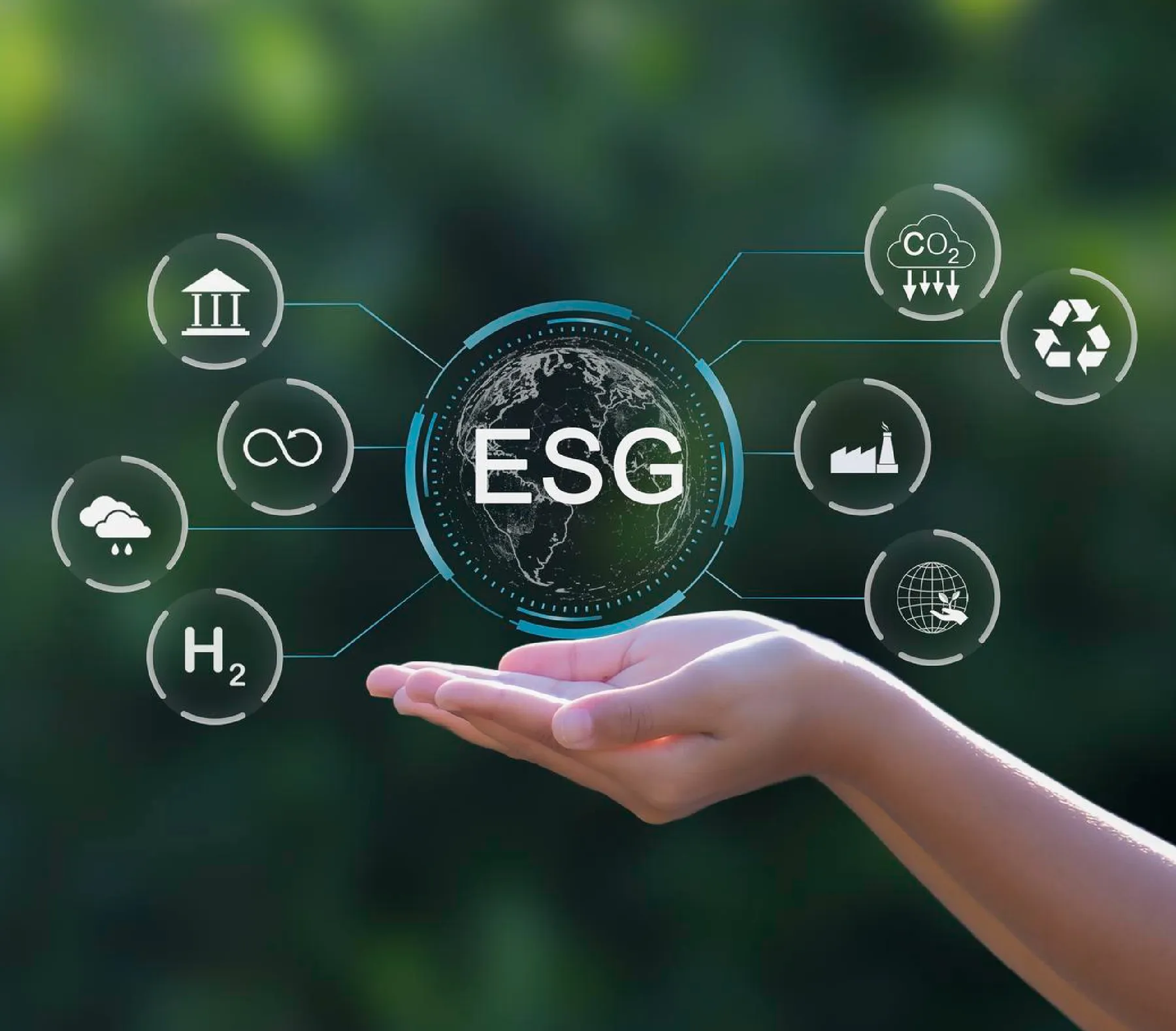
According to the Global Reporting Initiative at globalreporting.org, over 10,000 organisations globally now report using GRI Standards making it the most widely adopted reporting framework in the world and the primary reference standard for organisations beginning their ESG disclosure journey in Qatar.
For businesses operating in Qatar, Sustainability Consulting is not just about producing a report. It is about building the internal systems, data collection processes, and governance structures that make ESG performance real and then communicating that performance credibly to the stakeholders who are asking for it.
Which Organisations Need ESG Consulting in Qatar Right Now
ESG obligations in Qatar are not yet universally mandated but the direction of travel is clear and the businesses that start building their ESG frameworks now will be significantly ahead of those that wait for regulation to force the issue.
Organisations that need Sustainability Consulting support most urgently include:
Companies listed on the Qatar Stock Exchange facing increasing pressure to comply with QSE reporting guidelines
Businesses registered under the QFC where ESG and sustainability disclosure requirements are growing
Large private companies seeking institutional investment from funds that apply ESG screening criteria
Construction and infrastructure businesses managing labour welfare, environmental impact, and governance obligations on major Qatar projects
Energy sector companies particularly those involved in LNG, petrochemicals, and related industries facing international investor scrutiny on climate and carbon management
Businesses tendering for government contracts where ESG credentials are increasingly part of evaluation criteria
Multinational companies operating in Qatar whose global parent organisations require local ESG data for group level reporting
SMEs that want to build ESG frameworks proactively before regulatory requirements make it compulsory
ESG Services We Deliver for Businesses at Every Stage of the Journey
ESG consulting firms in Qatar need to offer more than framework selection and report writing. Real Sustainability Consulting helps organisations understand where they actually stand, build the processes needed to improve, and communicate their performance in a way that satisfies the stakeholders asking the hardest questions. Our services cover every stage of that journey.
ESG Baseline Assessment and Materiality Analysis
Before building an ESG programme a business needs to know where it currently stands. We conduct comprehensive baseline assessments that measure current ESG performance across all three pillars and identify the material issues the topics that matter most to your specific business and your specific stakeholders in the Qatar context.
ESG Strategy and Roadmap Development
A baseline assessment without a clear strategy for improvement is just a gap analysis. We develop ESG strategies that set measurable targets, assign ownership, prioritise actions, and build a realistic roadmap for improving performance across environmental, social, and governance dimensions over a defined timeframe.
ESG Reporting and Disclosure
We design and produce ESG reports aligned with the frameworks most relevant to your business and your stakeholders GRI Standards, IFRS S1 and S2, TCFD, or UN SDGs depending on what your investors, clients, and regulators expect to see. Reports are produced in Arabic and English as standard.
Stakeholder Engagement and Materiality Workshops
Understanding what your stakeholders actually care about is the foundation of a credible ESG programme. We design and facilitate stakeholder engagement processes and materiality workshops that identify the ESG topics most relevant to your business ensuring your reporting focuses on what matters rather than what is easiest to measure.
ESG Data Collection and Management Systems
Sustainability Reporting is only as credible as the data behind it. We help organisations build the internal data collection systems, monitoring processes, and verification frameworks needed to produce accurate and auditable ESG performance data across all three pillars.
Governance Framework Development
The governance pillar of esg is frequently the most underdeveloped in Qatar organisations. We help businesses build the board level oversight structures, ethics frameworks, anti corruption policies, and transparency practices that make governance ESG performance credible and sustainable.
ESG Consulting Services
Our ESG consulting services provide end-to-end advisory support to help organisations design, implement, and strengthen their Environmental, Social, and Governance frameworks. We work with leadership teams to integrate ESG principles into business strategy, governance structures, and operational processes. This includes ESG gap assessments, stakeholder mapping, policy development, KPI definition, risk and opportunity analysis, and implementation support to ensure ESG becomes a measurable and embedded part of business performance rather than a reporting exercise.
What are the Key Benefits Of ESG Consulting Services?
A well built esg programme does far more than satisfy a reporting obligation. It creates operational improvements, strengthens relationships with the stakeholders that matter most, and builds a competitive position that becomes more valuable as ESG expectations continue to rise.
Paste Text Here
| Benefit | What It Means for Your Business |
|---|---|
Investor Access |
ESG screened funds and institutional investors require credible disclosure before committing capital |
Contract Eligibility |
Government and corporate tenders increasingly include ESG criteria in supplier evaluation |
Risk Reduction |
Professionals increasingly choose employers with strong ESG credentials and values |
Talent Attraction |
Professionals increasingly choose employers with strong ESG credentials and values |
Operational Efficiency |
Environmental ESG improvements energy, water, waste consistently reduce operating costs |
Brand Reputation |
Credible ESG performance builds trust with clients, partners, and the public in Qatar and internationally |
ESG Reporting Frameworks Which Standard Applies to Your Business in Qatar
One of the first and most important decisions in any esg consulting engagement is framework selection. Different stakeholders expect different reporting formats and choosing the wrong framework wastes significant effort producing disclosure that does not satisfy the audiences asking for it.
GRI Standards
are the most widely used esg reporting framework globally and in Qatar. GRI provides a comprehensive structure covering all three ESG pillars and is designed for organisations of all sizes across all sectors. The GRI Universal Standards 2021 the latest version require all reporting organisations to disclose their impacts on the economy, environment, and people regardless of whether those impacts are material to the business financially. GRI is the most appropriate starting framework for most Qatar organisations beginning their ESG disclosure journey.
IFRS S1 and IFRS S2
are the newest additions to the global reporting landscape issued by the International Sustainability Standards Board in 2023. IFRS S1 covers general sustainability related financial disclosures and IFRS S2 covers climate specific disclosures. These standards are designed for investor facing reporting and focus specifically on sustainability risks and opportunities that affect a company's financial performance and enterprise value. For listed companies and businesses seeking institutional investment in Qatar, IFRS S1 and S2 are becoming increasingly important alongside GRI.
TCFD
the Task Force on Climate Related Financial Disclosures provides a framework specifically for climate risk and opportunity reporting. It is structured around four themes governance, strategy, risk management, and metrics and targets and is widely referenced by institutional investors and lenders assessing climate exposure. Qatar's energy sector companies and large real estate and infrastructure businesses face the most direct pressure to report against TCFD.
UN Sustainable Development Goals
the 17 SDGs provide a global reference framework that many Qatar organisations use to contextualise their ESG activities within the broader national and international development agenda. Qatar National Vision 2030 maps strongly against multiple SDGs and reporting against them connects business ESG performance to national priorities in a way that resonates with government and public stakeholders.
Finsoul Network Qatar assesses each client’s stakeholder landscape and reporting obligations before recommending a framework ensuring ESG disclosure is built around what your specific audiences actually need rather than what is generically available.
ESG Challenges That Expose Businesses to Investor and Regulatory Risk in Qatar
Most ESG problems in Qatar are not the result of businesses performing badly on environmental, social, or governance dimensions. They are the result of businesses that perform reasonably well but cannot demonstrate it because they have not built the systems, collected the data, or produced the disclosure that stakeholders require.
Here is where Qatar businesses most commonly face ESG exposure and what we do to address each challenge:
No ESG baseline or measurement framework
Businesses that have never measured their ESG performance cannot set targets, track progress, or produce credible disclosure. We conduct comprehensive baseline assessments that give organisations a clear and accurate starting point.
Framework confusion
Selecting the wrong reporting framework for your stakeholder audience produces disclosure that satisfies no one. We assess your specific stakeholder landscape and recommend the framework combination that best meets your reporting obligations.
Poor ESG data quality
Reports built on incomplete, inconsistent, or unverified data are easily challenged and damage credibility with sophisticated investors and auditors. We build internal data collection systems that produce accurate and auditable ESG performance information.
Governance pillar gaps
Board level ESG oversight, ethics frameworks, and transparency practices are frequently underdeveloped in Qatar organisations. We help businesses build governance structures that make the G in esg as strong as the E and the S.
Labour and social pillar exposure
Qatar's predominantly expatriate private sector workforce creates specific social ESG obligations around worker welfare, health and safety, and supply chain labour standards. We help businesses meet these obligations and document their performance accurately.
Climate and carbon reporting gaps
International investors and partners increasingly require climate risk disclosure aligned with TCFD and IFRS S2. We help energy sector, construction, and industrial businesses build climate reporting frameworks that satisfy investor expectations.
No Arabic ESG disclosure
Most ESG reports produced in Qatar are English only limiting their reach and impact with Arabic speaking stakeholders including government bodies and local investors. We produce all ESG reports in Arabic and English as standard.
Step-by-Step Process of ESG Strategy
Building a credible ESG programme requires a structured process that moves from understanding current performance to setting targets, building systems, and ultimately producing disclosure that stakeholders trust. Our approach is designed to take businesses through every stage of that journey efficiently and thoroughly.
01
Stakeholder Mapping and Materiality Assessment
We begin by identifying your key stakeholder groups investors, regulators, clients, employees, and community and understanding what ESG topics matter most to each group in the Qatar context. This materiality assessment becomes the foundation for every subsequent decision in the ESG programme.
02
ESG Baseline Assessment
We conduct a comprehensive assessment of current ESG performance across all three pillars measuring environmental indicators, social performance data, and governance structures against the requirements of the selected reporting framework and the expectations identified in the materiality assessment.
03
Gap Analysis and Target Setting
Based on the baseline we identify the gaps between current performance and where the business needs to be. We work with leadership to set realistic and measurable ESG targets across each pillar creating the performance improvement roadmap that drives the programme forward.
04
Data Systems and Internal Process Development
We help organisations build the internal data collection processes, monitoring systems, and governance structures needed to track ESG performance accurately throughout the year. This infrastructure is what makes annual reporting efficient and credible rather than a last minute data scramble.
05
ESG Report Production
We write, design, and produce the ESG report in the agreed framework format GRI, IFRS S1 S2, TCFD, or a combined approach in both Arabic and English. The report is reviewed against framework requirements before publication to ensure all mandatory disclosures are complete and accurate.
06
Ongoing ESG Advisory and Performance Monitoring
ESG is not an annual exercise. We provide ongoing advisory support that helps organisations monitor performance against targets, respond to evolving stakeholder expectations, and continuously improve ESG disclosure quality year on year.
Build an ESG Position That Investors and Regulators Respect
ESG expectations in Qatar are rising and the businesses building credible programmes now will hold a significant advantage over those that wait. Whether you are producing your first ESG report, responding to investor disclosure requests, or building a long term ESG strategy aligned with Vision 2030, Finsoul Network Qatar has the expertise to help you build a programme that is credible, comprehensive, and genuinely valuable to your business.
Contact us today and let our consultants design an ESG framework that turns your performance into a competitive advantage.
ESG Consulting Engagement Cost and Timeline in Qatar
Sustainability Consulting investment depends on the size and complexity of the organisation, the number of ESG pillars requiring development, and the reporting framework or frameworks being targeted. The table below provides a general reference framework.
| Engagement Type | Estimated Timeline | Cost Range |
|---|---|---|
ESG baseline assessment and gap analysis |
4 to 6 weeks |
Varies by scope |
Materiality assessment and stakeholder engagement |
3 to 5 weeks |
Customised quote |
ESG strategy and roadmap development |
4 to 8 weeks |
Customised quote |
ESG report production GRI or IFRS S1 S2 |
6 to 10 weeks |
Varies by complexity |
Governance framework development |
4 to 6 weeks |
Customised quote |
Full annual ESG programme management |
Ongoing |
Customised engagement |
Timelines and costs depend on organisation size, ESG maturity level, framework requirements, and scope of work. A proposal is provided after the initial consultation.
Qatar National Vision 2030 and ESG Why National Goals Now Set the Corporate Standard
Qatar’s esg consulting firms cannot operate without a deep understanding of Qatar National Vision 2030. This is not background context it is the strategic framework that shapes what ESG means for businesses operating in Qatar specifically and how ESG performance connects to the national agenda that government bodies, investors, and major clients are all aligned around.
Vision 2030 is built on four interconnected pillars human development, social development, economic development, and environmental development. Each pillar maps directly onto the ESG framework in ways that are not coincidental. They reflect a deliberate national commitment to building an economy that is environmentally responsible, socially equitable, and governed with transparency and accountability.
The environmental pillar of Vision 2030 sets specific targets for reducing Qatar’s carbon emissions, managing water resources sustainably, protecting biodiversity, and reducing dependence on hydrocarbon revenues. For businesses operating in energy, construction, manufacturing, and real estate the sectors that carry the heaviest environmental footprint these national targets translate directly into ESG performance expectations that institutional investors and government procurement bodies apply when evaluating suppliers, partners, and investees.
The social pillar of Vision 2030 addresses Qatarisation targets, workforce development, and community investment all of which have direct social ESG reporting implications for businesses operating with predominantly expatriate workforces. The post World Cup labour reform legacy has further elevated health, safety, and worker welfare standards as social ESG metrics that international partners and investors actively scrutinise.
The governance pillar of Vision 2030 drives transparency, accountability, and anti corruption standards across both public and private sectors making governance ESG performance increasingly relevant for any business seeking government contracts or public sector partnerships in Qatar.
Finsoul Network Qatar builds ESG strategies that explicitly align client performance with Vision 2030 priorities ensuring that ESG disclosure resonates with the national agenda that shapes Qatar’s business environment and positions clients as committed contributors to the country’s long term development goals.
Accounting Standards That Apply to ESG in Qatar
IFRS S1 Sustainability Related Financial Disclosures
IFRS S1 requires organisations to disclose material information about sustainability related risks and opportunities that could reasonably affect their cash flows, financing, and enterprise value. It is designed to sit alongside IFRS financial statements and is becoming a baseline expectation for listed companies and businesses seeking institutional investment in Qatar.
IFRS S2 Climate Related Disclosures
IFRS S2 requires specific disclosure on climate related risks and opportunities covering governance, strategy, risk management, and metrics including Scope 1, Scope 2, and Scope 3 greenhouse gas emissions. For Qatar's energy sector and large industrial businesses, IFRS S2 compliance is rapidly moving from voluntary to expected.
GRI Universal Standards 2021
While not an accounting standard in the traditional sense, GRI Standards provide the most comprehensive framework for reporting of ESG across all three pillars. The 2021 update requires all reporting organisations to disclose their impacts on the economy, environment, and people making GRI the practical standard against which most ESG reports in Qatar are evaluated.
IAS 37 Provisions Contingent Liabilities and Contingent Assets
Environmental liabilities remediation obligations, pollution clean up costs, and regulatory penalties must be recognised in financial statements under IAS 37 where the obligation is probable and can be reliably estimated. Businesses with significant environmental footprints must ensure their ESG environmental assessments are reflected correctly in their financial provisions.
Information and Data Required to Begin Your ESG Assessment
Before we can conduct a meaningful ESG baseline assessment our team needs access to a range of operational and financial data across all three ESG pillars. The information below forms the foundation of every ESG engagement.
| Information Required | Purpose |
|---|---|
Energy consumption data electricity, fuel, gas |
Calculate carbon footprint and environmental performance metrics |
Water consumption and waste generation records |
Assess environmental resource management performance |
Workforce data headcount, nationality, gender, turnover |
Measure social pillar performance and diversity metrics |
Health and safety records incidents, training, policies |
Assess social pillar worker welfare and safety performance |
Board structure and governance documentation |
Evaluate governance pillar transparency and accountability |
Supply chain information and procurement policies |
Assess social and environmental supply chain performance |
Existing corporate policies ethics, anti corruption, whistleblower |
Review governance framework completeness and effectiveness |
Regulatory Bodies and Frameworks Shaping ESG Expectations in Qatar
ESG expectations in Qatar come from multiple directions national regulators, international standard setters, stock exchange guidelines, and institutional investors all play a role in defining what ESG performance and disclosure looks like for businesses operating here.
Qatar Stock Exchange
The QSE has introduced reporting of ESG guidelines for listed companies and is progressively strengthening its expectations around sustainability disclosure. Listed companies face the most immediate and structured eporting obligations in Qatar's regulatory environment.
Qatar Financial Centre Regulatory Authority
The QFCRA is increasing ESG and sustainability disclosure expectations for businesses regulated within the QFC. Financial services firms and professional service organisations registered under the QFC face growing pressure to demonstrate credible ESG performance as part of their regulatory compliance obligations.
Ministry of Environment and Climate Change Qatar
Oversees environmental regulation and compliance in Qatar including the national commitments under the Paris Agreement and the Qatar National Environment and Climate Change Strategy. Environmental ESG obligations increasingly intersect with formal regulatory requirements under this ministry's oversight.
International Sustainability Standards Board
The ISSB operating under the IFRS Foundation is the global body responsible for developing IFRS S1 and IFRS S2. Its standards are increasingly being adopted by regulators globally and are expected to become the baseline for investor facing ESG disclosure in Qatar as adoption accelerates across the GCC.
Industries Where ESG Performance Is Now a Business Critical Requirement
ESG performance expectations are concentrated most intensely in the industries where environmental impact, social obligations, and governance scrutiny are highest but the direction of travel is towards universal application across all sectors.
Energy and petrochemical companies managing carbon emissions, climate risk disclosure, and environmental impact reporting under international investor scrutiny
Construction and infrastructure businesses managing labour welfare, environmental impact, and governance on major Qatar projects
Financial services and investment firms where ESG screening by institutional investors and regulatory expectations from QFCRA are both intensifying
Real estate developers managing environmental certifications, tenant welfare, and community impact alongside growing green building requirements
Manufacturing and industrial enterprises with significant environmental footprints requiring measurement, reduction, and credible disclosure
Hospitality and retail businesses responding to growing consumer and partner expectations around social and environmental responsibility
Technology companies where governance standards, data ethics, and supply chain responsibility are increasingly scrutinised by clients and investors
Why Businesses Trust Finsoul Network Qatar for ESG Consulting
Choosing the right esg consulting firms partner in Qatar means choosing a team that combines technical framework knowledge with deep understanding of the Qatar market, the Vision 2030 agenda, and the stakeholder expectations that actually shape ESG requirements for businesses operating here.
Businesses across Qatar trust Finsoul Network Qatar because we deliver ESG programmes that are technically credible, strategically aligned, and practically implemented not generic reports that satisfy no one.
Note: The above-mentioned services are provided via network firms if not provided directly.
Deep knowledge of Qatar's ESG landscape including QSE guidelines, QFCRA requirements, and Vision 2030 alignment
Multi framework expertise GRI, IFRS S1 S2, TCFD, and UN SDGs with clear guidance on which combination is right for your stakeholder audience
Bilingual Arabic and English reporting of ESG all reports produced to the same standard in both languages
Data system development we build the internal processes that make reporting accurate, efficient, and auditable
Governance development expertise we build the board level oversight and ethics frameworks that make governance ESG performance credible
Ongoing annual advisory ESG is a continuous improvement programme not a one time report and we support clients throughout the full annual cycle
How We Helped a Qatar Organisation Build Its First ESG Report From the Ground Up
Starting an ESG programme from zero is overwhelming for most organisations. This case shows how a structured approach makes the process manageable and produces a credible first report that sets a strong foundation for ongoing improvement.
The Problem
Finsoul Network Qatar conducted an accelerated baseline assessment covering all three ESG pillars collecting energy, water, and waste data, reviewing workforce and safety records, and assessing governance documentation. We identified the material ESG topics most relevant to a Qatar construction business and its government stakeholders, selected GRI Standards as the primary reporting framework, and built a data collection process to fill the measurement gaps. We produced a complete first ESG report in Arabic and English within the deadline.
What We Did
Finsoul Network Qatar conducted a full digital audit covering website technical performance, keyword rankings, competitor analysis, and existing paid campaign structure. We rebuilt the Google Ads account from scratch with properly structured campaigns, relevant keyword targeting, and conversion optimised landing pages. We launched a LinkedIn content and advertising programme targeting senior decision makers in the firm’s key industry sectors and developed an Instagram presence with bilingual Arabic and English content aligned to the Qatar business community.
The Result
Both government clients accepted the ESG report and the company successfully renewed both contracts. The baseline data collected during the first report became the foundation for a formal ESG improvement programme. The company engaged Finsoul Network Qatar to manage the annual ESG reporting cycle and develop a three year ESG strategy aligned with Qatar National Vision 2030 priorities.
Frequently Asked Questions
FAQs about ESG consulting in Qatar help businesses understand reporting standards, compliance needs, and key sustainability metrics. They also clarify how ESG improves transparency, risk management, and investor confidence.
Every successful business transformation begins.
Finsoul Network Qatar offers personalized consultations to understand your goals, identify challenges, and design strategies that unlock measurable growth through
GRI focuses on environmental, social, and economic impact, while IFRS S1 and S2 focus on financial risks, investor value, and business sustainability.
Government clients often assess labour welfare, workplace safety, environmental management, governance standards, and local employment contributions aligned with Qatar National Vision 2030.
ESG governance focuses on board structure, transparency, ethics, and risk controls, helping private businesses meet investor expectations and improve long-term resilience.
ESG is already mandatory for certain regulated and listed entities. Other businesses increasingly face ESG demands from investors, clients, and future regulatory developments.
Businesses should prioritise expatriate worker welfare, fair compensation, health, safety, and labour rights to meet international standards and strengthen social responsibility.