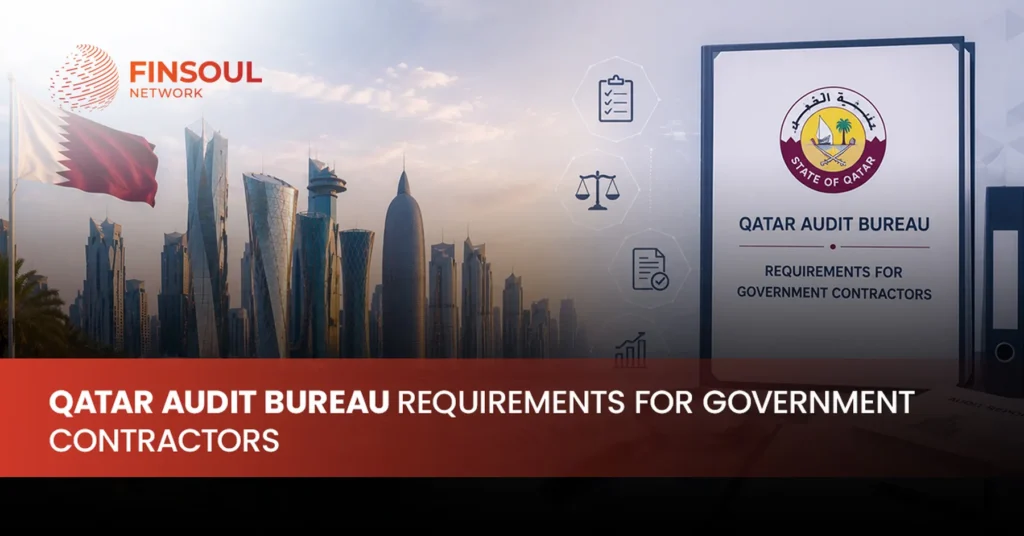
Qatar Audit Bureau Requirements for Government Contractors
Qatar’s public procurement system rests on a simple principle: public money must be spent transparently, accounted for accurately, and used exactly as intended. As the country continues to invest heavily in infrastructure, healthcare, technology and public services, the volume of government contracts awarded to private companies has grown significantly. With that growth comes closer scrutiny, and government contractors are increasingly expected to understand how the Qatar Audit Bureau operates and what it expects from the companies delivering public projects. Finsoul Network Qatar walks through what the Qatar Audit Bureau does, which contractors may fall within its scope, the core requirements contractors should be aware of, and the practical steps companies can take to stay audit-ready throughout the life of a government contract. Understanding the Qatar Audit Bureau The Qatar Audit Bureau, formally known as the State Audit Bureau, is the independent government body responsible for overseeing the use of public funds across state entities and government-funded projects. Its role is to safeguard public finances by reviewing how ministries, government agencies and publicly funded initiatives manage budgets, procurement and expenditure. It’s important to understand where contractors fit into this picture. The Audit Bureau’s primary oversight applies to public entities themselves, not private companies directly. However, when a contractor delivers work under a government contract, that contract and its associated expenditure fall within the scope of the Bureau’s review of the government entity involved. In practice, this means contractors may be asked to provide records, documentation and cooperation to support the government body’s audit obligations, even though the contractor itself is not the primary subject of the audit. Why Government Contractors Must Understand Audit Requirements Understanding audit expectations isn’t just about avoiding findings during a review. It plays a direct role in how smoothly a contract runs and how a company is positioned for future opportunities. Protecting public funds by ensuring project expenditure is properly justified and accounted for. Ensuring contract compliance with agreed terms, scope and approved budgets. Preventing fraud and financial irregularities through consistent documentation and internal oversight. Supporting transparent procurement practices that reflect well on both the contractor and the awarding entity. Maintaining eligibility for future government projects, since a strong compliance record often influences future tender outcomes. Contractors who build these principles into daily operations tend to experience fewer disputes, faster payment approvals and stronger long-term relationships with government clients. Which Contractors May Be Subject to Audit Bureau Review? Government‑funded contracts often fall under the Audit Bureau’s review to ensure transparency, accountability, and proper use of public funds. Contractors across multiple sectors may be subject to scrutiny depending on project type and value. Construction contractors: Public infrastructure and building projects tied to contract milestones and expenditure. Infrastructure companies: Large‑scale public works with high value and complexity. Engineering consultants: Design, technical, and advisory services under government‑funded projects. IT service providers: Software, systems, and digital infrastructure delivered to government entities. Maintenance contractors: Ongoing upkeep of public assets and facilities under service agreements. Healthcare suppliers: Equipment, materials, and services provided to publicly funded healthcare providers. Equipment vendors: Machinery, tools, and technical equipment supplied under procurement contracts. Facility management companies: Operation and maintenance of government‑owned or funded buildings. Logistics providers: Movement, storage, and distribution of goods tied to public projects. Professional service firms: Consultancies and advisory businesses delivering specialised services under government engagements. How the Qatar Audit Bureau Interacts with Government Contractors The Bureau’s interaction with contractors generally flows through the government entity managing the contract, but the practical impact on contractors is significant. Areas of focus typically include: Contract review to confirm terms and obligations have been properly documented and followed. Financial oversight of project-related expenditure and payments. Procurement compliance, checking that contracts were awarded in line with approved procedures. Project expenditure verification, matching costs claimed against supporting evidence. Contract performance monitoring, assessing whether deliverables match agreed scope and timelines. Documentation inspection, reviewing the completeness and accuracy of project records. Compliance reviews covering internal controls and governance practices relevant to the contract. Contractors who anticipate these areas of focus and maintain organised records throughout the project lifecycle are far better positioned when a review takes place. Key Qatar Audit Bureau Requirements for Government Contractors Government contractors in Qatar must comply with strict Audit Bureau standards to ensure transparency and accountability. These requirements safeguard public funds and reinforce confidence in project delivery and financial management. Accurate Financial Recordkeeping Reliable financial records form the backbone of audit readiness. Contractors should maintain complete accounting records, a properly maintained general ledger, and supporting documentation for every transaction. Payment records, invoice management systems and a clear audit trail all help demonstrate that project finances have been handled responsibly and can be traced from source to settlement. Proper Contract Documentation Every stage of a government contract should be backed by formal documentation. This includes signed contracts, amendments, change orders, scope approvals, purchase orders, delivery records and completion certificates. Gaps in this documentation are among the most common issues identified during reviews, so contractors should treat contract paperwork as a living record that is updated continuously, not compiled retroactively. Procurement Compliance Where contractors are involved in sourcing goods or services as part of contract delivery, procurement decisions should reflect the tender conditions and approved procedures under which the contract was awarded. This includes maintaining contract award documentation, evidence of competitive bidding where applicable, and transparency around supplier selection. Expense Verification Every cost claimed against a government contract should be backed by clear evidence. This applies to material purchases, labour costs, equipment expenses, subcontractor payments and project overheads. Without this evidence, expenses can be flagged as unsupported, even if the underlying cost was legitimate. Supporting Documents for Payments Payment claims should be accompanied by tax invoices, delivery notes, timesheets, work completion certificates, bank payment confirmations and purchase documentation. Keeping this documentation organised and readily accessible significantly reduces the time and effort needed to respond to audit queries. Internal Controls Strong internal controls demonstrate that a contractor’s financial and operational processes are well governed. Key elements include segregation of